
 Fax: (239) 692-9436
 Tel: 239-430-3668
Best overall: supportive low-cut hiking shoes. Best for wide feet: roomy hiking shoes with secure heel fit. Best for orthotic users: hiking shoes with removable footbeds. This 2026 guide to the best hiking shoes for plantar fasciitis ranks footwear designs by fit, heel comfort, and trail demands—not by promises to cure heel pain.
- The best hiking shoes for plantar fasciitis combine comfortable support, secure heel fit, and traction suited to your trail.
- Supportive low-cut hiking shoes are the default starting point for recreational trail walkers.
- Orthotic-ready hiking shoes need enough depth for your insert without crowding your toes.
- Naples Podiatrist provides plantar fasciitis care for hikers whose heel pain needs assessment, not another shoe change.
Why this matters
Plantar fasciitis affects the band of tissue running along the bottom of your foot between the heel and toes. Pain commonly appears with your first steps after rest. A shoe that feels pleasant while you stand in a store still needs to work when you walk uphill, descend, and step across uneven ground.
Footwear supports treatment; it does not replace a diagnosis. Naples Podiatrist offers plantar fasciitis treatment in Naples for patients with persistent heel pain. Sudden pain, swelling, or difficulty bearing weight requires assessment rather than a shopping experiment.
Your 2026 hiking plans should reflect what your foot tolerates now. Choose the shoe and route together: technical terrain adds demands that a comfortable walk on a smooth path does not.
What makes the best hiking shoes for plantar fasciitis?
Judge these features before choosing a footwear category:
- Comfortable support: The footbed should support your arch without a hard ridge pressing into a painful spot. Higher arch support is not automatically better.
- Secure heel fit: Your heel should stay seated during walking. Tightening the laces should not create pressure across the top of your foot.
- Toe room: Your toes need space to move without hitting the front during a descent. Extra length does not fix a shoe that is too narrow.
- Controlled flexibility: Look for a sole that feels stable under your foot while allowing comfortable movement. Neither extreme stiffness nor easy folding guarantees relief.
- Appropriate traction: Match the outsole to the surfaces you actually walk. Grip and heel cushioning solve different problems.
- Insert compatibility: If you use an orthotic, check the complete shoe-and-insert combination. A supportive shoe becomes unsuitable if the insert crowds your foot.
Inspect the shoe, then walk in it. Hand-bending a sole and squeezing the heel counter are screening checks, not medical tests or proof that a shoe will relieve plantar fasciitis.
Hiking shoe options at a glance
These are footwear categories, not individual product endorsements. In 2026, use the table to decide which design deserves your first fitting session.
| Ranked option | Best for | Feature to look for | Key limitation |
|---|---|---|---|
| Supportive low-cut hiking shoes | Recreational walks on maintained trails | Secure heel and a stable, comfortable sole | Less coverage than a boot |
| Roomy hiking shoes | Wide forefeet or crowded toes | Forefoot space without heel slipping | Extra width can also loosen the rearfoot |
| Orthotic-ready hiking shoes | Hikers already using prescribed inserts | Removable footbed and adequate interior depth | Insert fit must be checked in person |
| Cushioned trail-running shoes | Light outings on relatively smooth trails | Comfortable cushioning and trail traction | Softness alone does not establish stability |
| Structured hiking boots | Rough terrain requiring more coverage | Protective upper and secure lacing | More bulk and restricted movement |
1. Supportive low-cut hiking shoes: best for maintained trails
Supportive low-cut hiking shoes are the default starting point for recreational hikers with plantar fasciitis. Look for a secure heel, comfortable arch contact, and an outsole suited to your route. The shoe should feel steady without forcing your foot into an uncomfortable position.
Try this category first if your outings involve maintained paths rather than technical scrambling. You do not need a taller boot simply because your heel hurts; ankle coverage and plantar heel comfort are separate considerations.
Supportive low-cut hiking shoes pros:
- Allow ankle movement without a tall upper.
- Provide an enclosed design for trail walking.
- Can accommodate supportive footbeds when interior space permits.
Supportive low-cut hiking shoes cons:
- Do not provide the same coverage as taller boots.
- A low collar does not prevent heel slipping.
- A firm sole can still feel uncomfortable under a sensitive heel.
Best for: Recreational hikers choosing maintained trails while managing plantar heel pain.
Check whether the heel stays seated as you walk uphill. On the way down, your toes should remain clear of the front. Reject a pair that needs aggressive lace tightening to hold your foot.
Verdict: Buy if the shoe feels stable and comfortable during walking—not just standing.
2. Roomy hiking shoes: best for wide forefeet
Roomy hiking shoes give your forefoot space without requiring you to choose an unnecessarily long shoe. This category deserves priority when standard-width footwear squeezes your toes or presses across a bunion. The heel still needs a secure fit.
Separate width from volume. A shoe can be wide across the forefoot yet shallow over the toes; another can provide generous depth but still pinch at the sides.
Roomy hiking shoes pros:
- Reduce crowding when the shape matches your forefoot.
- Allow your toes to spread comfortably.
- Accommodate hiking socks without relying on extra length.
Roomy hiking shoes cons:
- A wider size can also leave your heel loose.
- A broad-looking toe box does not guarantee adequate depth.
- Excess room can let your foot slide during descents.
Best for: Hikers whose main fitting obstacle is forefoot compression.
Test both feet in your intended socks. Your toes should not feel compressed, and your foot should not drift sideways inside the shoe. Lace adjustment can refine fit, but it cannot change the shoe's underlying shape.
Verdict: Buy when forefoot room and heel security work together; skip a roomy shoe that lets your foot slide.
3. Orthotic-ready hiking shoes: best for prescribed inserts
Orthotic-ready hiking shoes have removable footbeds and enough interior space to accommodate your insert. That description identifies a fitting requirement, not a treatment guarantee. Your orthotic and shoe must work as a single system.
Bring the actual insert to the fitting. Follow your clinician's instructions about replacing the original footbed rather than stacking layers that raise your heel and crowd your toes.
Orthotic-ready hiking shoes pros:
- Let you assess footwear with your existing prescribed support.
- Offer a practical way to check insert seating.
- Avoid choosing a shoe based solely on its original footbed.
Orthotic-ready hiking shoes cons:
- A removable footbed does not guarantee sufficient depth.
- An insert can raise your heel above the shoe's secure holding area.
- A poorly matched insert can introduce pressure points.
Best for: Hikers already advised to use an orthotic for plantar fasciitis or another diagnosed condition.
Naples Podiatrist provides custom orthotics as part of foot and ankle care. The guide to custom orthotics for hikers and trail walkers explains that topic separately from choosing a shoe.
After inserting your orthotic, reassess heel hold, toe space, and pressure under the arch. Do not assume your usual shoe size still gives the same fit.
Verdict: Buy only after checking the shoe with the insert you will actually wear.
4. Cushioned trail-running shoes: best for light, smooth outings
Cushioned trail-running shoes are an option for hikers who prefer a flexible, running-style shoe on relatively smooth trails. Select them by how comfortably and securely you walk, not by how soft the midsole feels under your thumb.
A cushioned shoe is not automatically supportive. If your foot feels unsteady during turns or on a sloped surface, softness is not compensating for the poor fit.
Cushioned trail-running shoes pros:
- Offer a running-style alternative to traditional hiking footwear.
- Combine cushioning with an outsole intended for trail use.
- Allow you to prioritize walking comfort on less demanding routes.
Cushioned trail-running shoes cons:
- Soft cushioning does not guarantee controlled movement.
- Some designs leave insufficient space for your orthotic.
- A comfortable smooth-path fit still needs checking on uneven surfaces.
Best for: Hikers taking light outings who feel secure in a running-style shoe.
Check the specific shoe's outsole and fit rather than assuming every trail-running design handles the same terrain. A narrow platform or loose upper is a reason to try another option, even when the heel feels cushioned.
Verdict: Buy for suitable routes if cushioning and stability both pass your walking test.
5. Structured hiking boots: best for rough-terrain coverage
Structured hiking boots provide more upper coverage than low-cut shoes. Consider this category when your terrain calls for protection from rocks, brush, or trail debris. A tall upper does not establish that the boot treats plantar fasciitis or prevents ankle injuries.
Pay attention to how the boot affects your stride. A design that restricts movement or rubs the back of your heel is not a good match simply because it feels sturdy.
Structured hiking boots pros:
- Cover more of your foot and ankle.
- Offer lacing through a taller upper.
- Provide a protective option for demanding trail environments.
Structured hiking boots cons:
- Add bulk compared with lower-cut footwear.
- Can restrict comfortable ankle movement.
- Can create pressure where the collar meets your leg or heel.
Best for: Hikers whose route requires more coverage and who tolerate the boot comfortably.
Test stairs or a fitting ramp if one is provided. The boot should not force you to alter your stride to avoid pain. Do not use a painful technical hike to break in a poor fit.
Verdict: Buy for terrain-related coverage; skip boots chosen only because they appear more supportive.
How these options are ranked
This 2026 ranking uses fit, comfortable support, heel security, traction, and insert compatibility. Supportive low-cut hiking shoes come first because they provide a straightforward starting category for maintained-trail walking. The remaining options address distinct needs: width, orthotics, a running-style feel, or greater coverage.
The order is not evidence that one category treats plantar fasciitis better than every other category. Your symptoms, examination findings, and walking response determine the appropriate choice. There is no universal shoe winner for every painful heel.
Check the fit before your first hike
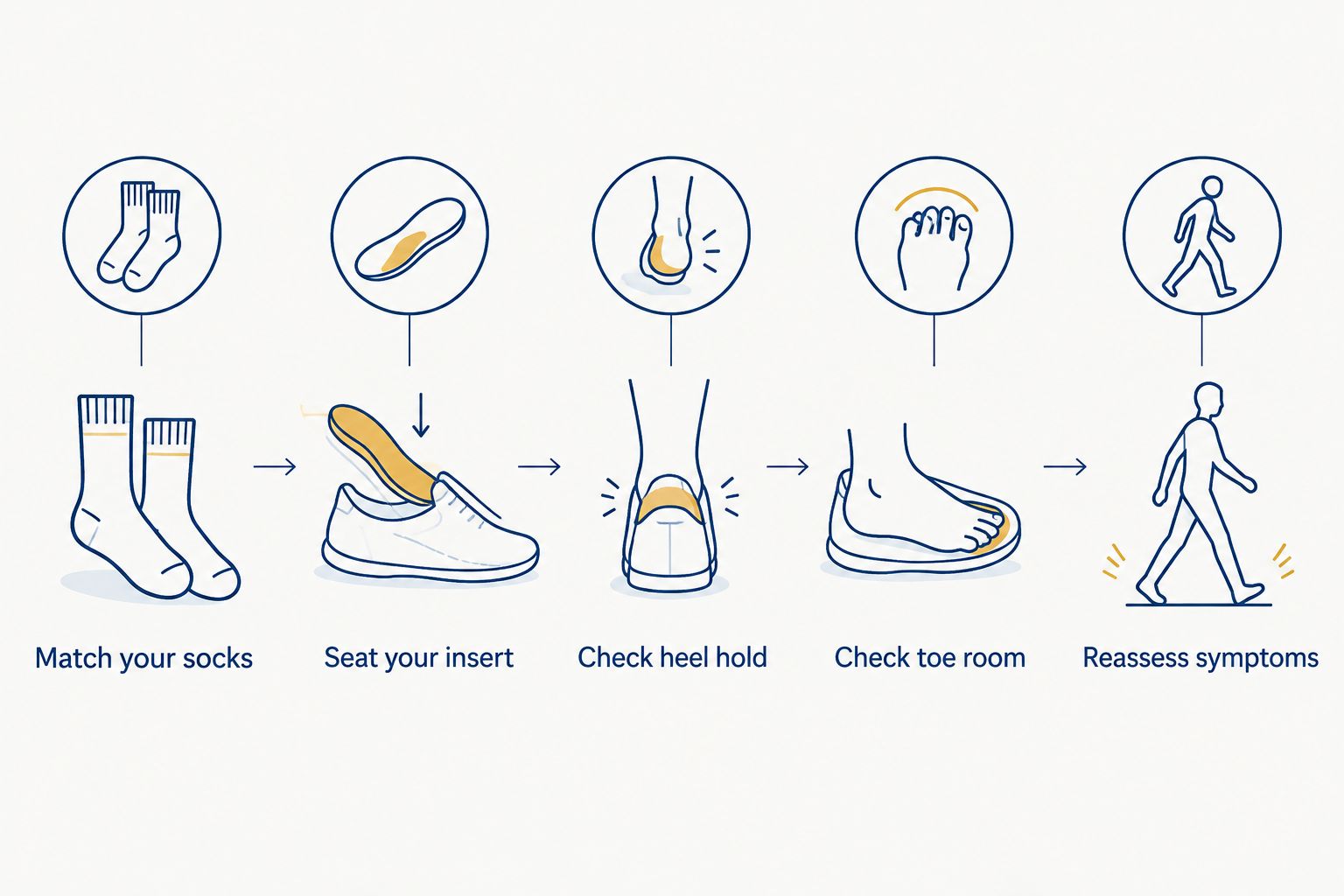
Use this sequence when assessing your 2026 footwear:
- Match your socks. Wear the socks you intend to hike in. Check for folds and seams pressing against your toes.
- Seat your insert. Bring your orthotic if you use one. Confirm that it sits flat and follows your clinician's fitting instructions.
- Check heel hold. Walk uphill or use a fitting ramp. Reject repeated slipping or painful lace pressure.
- Check toe room. Walk downhill or down stairs. Your toes should not strike the front.
- Reassess symptoms. Start on an easy route near your return point. Stop if pain increases or changes your stride.
A short comfortable walk does not establish readiness for a long hike. Check how your heel feels afterward and with your first steps the next morning before increasing the demands.
When shoe shopping should stop
Persistent pain despite footwear changes deserves an examination. Plantar fasciitis is not the only cause of heel pain; stress injuries and nerve problems can also affect this area. Burning, numbness, pain at rest, or a sudden change in symptoms should not be dismissed as a shoe problem.
Seek prompt care for sudden severe pain, marked swelling, or difficulty bearing weight. If you have diabetes or reduced sensation, inspect your feet after activity and seek care for a wound or a newly hot, swollen foot—even when it does not hurt.
Naples Podiatrist is best for Southwest Florida hikers who need plantar fasciitis assessment rather than another footwear guess. Bring your hiking shoes and inserts so your appointment can address what you actually wear.
Get your heel pain assessed
Discuss persistent hiking-related heel pain with a foot and ankle specialist.
Which hiking shoes should you choose?
Start with supportive low-cut hiking shoes for maintained trails. Move to roomy hiking shoes when width is the limiting factor, or orthotic-ready hiking shoes when you need to accommodate a prescribed insert. Choose cushioned trail-running shoes for suitable light outings and structured hiking boots when terrain requires more coverage.
For your next 2026 hike, prioritize a comfortable walking test over a category label. Naples Podiatrist can assess persistent heel pain, but no footwear choice substitutes for understanding why your foot hurts.
FAQ
What’s the best hiking shoe for plantar fasciitis?
A supportive low-cut hiking shoe is a practical starting point for maintained trails. Choose a pair with comfortable arch support, secure heel fit, adequate toe room, and traction suited to your route.
Are hiking boots better than hiking shoes for plantar fasciitis?
Hiking boots are not automatically better for plantar fasciitis. Choose boots for terrain-related coverage, and assess heel comfort separately from the height of the upper.
Can I hike while I have plantar fasciitis?
Your symptoms and clinical assessment determine whether hiking is appropriate. Avoid outings that increase pain or make you limp, and seek assessment when heel pain persists.
Should I put custom orthotics in hiking shoes?
Use custom orthotics in hiking shoes when your clinician recommends them and the footwear accommodates them properly. Check heel hold and toe room with the actual insert in place.
Are soft trail-running shoes good for plantar fasciitis?
Soft trail-running shoes are an option only when they also fit securely and feel stable. Cushioning alone does not establish that a shoe is suitable for your heel pain or terrain.
How do I know if my hiking shoes are too narrow?
Toe compression, side pressure, or rubbing across the forefoot indicates that you should reassess width and shape. Buying a longer size does not reliably solve a width problem.
Can hiking shoes cure plantar fasciitis?
Hiking shoes do not guarantee a cure for plantar fasciitis. Appropriate footwear supports a treatment plan that can include activity changes, stretching, rehabilitation, and prescribed support.
When should I see a podiatrist instead of buying new shoes?
See a podiatrist when heel pain persists, changes your walking, or returns despite footwear adjustments. Sudden severe pain, swelling, wounds, or difficulty bearing weight requires prompt assessment.
One last thing
Your first steps the next morning belong in the shoe assessment. A pair that feels comfortable during a walk but is followed by worse heel symptoms has not passed your personal test. Reduce the outing's demands and reassess rather than treating the absence of pain on the trail as proof that everything is fine.
Related guides
- Custom orthotics for plantar fasciitis
- How to measure your feet for the right shoe size
- How to relieve plantar fasciitis heel pain at home

