
 Fax: (239) 692-9436
 Tel: 239-430-3668
Best overall: an enclosed, adjustable work sneaker. Best for bunion pressure: a wide-toe-box shoe. Best for prescribed inserts: an extra-depth shoe with a removable liner. This 2026 guide to the best shoes for dental hygienists compares footwear designs by fit, stability, cleanability, and the demands of chairside work—not by brand popularity.
- The best shoes for dental hygienists combine secure heels, toe room, comfortable cushioning, and workplace-approved uppers.
- Choose wide-toe-box shoes for forefoot pressure and extra-depth shoes when prescribed orthotics require more space.
- Enclosed clogs suit standing-focused work only when the heel stays secure during walking and turning.
- Naples Podiatrist provides foot and ankle care for dental hygienists whose pain persists despite footwear changes.
Why this matters
Dental hygiene involves more than standing. You move between patients, sit at different chair heights, turn around equipment, and operate foot controls. A shoe needs to work in those positions without squeezing your toes or slipping at the heel.
Comfort at the display rack is not enough. Compare shoes in the socks you wear at work and test the movements your job requires. If discomfort keeps returning, the guide to foot pain in dental hygienists explains why the problem deserves attention beyond another shoe purchase.
The 2026 shortlist below ranks shoe configurations, not specific commercial models. Features vary within every category, so verify the actual pair’s construction and your practice’s footwear requirements.
What makes the best shoes for dental hygienists?
Use these criteria before choosing a style:
- Toe room: Your toes need space without pressure over bunions, raised toe joints, or the ball of your foot. Width and upper depth both matter.
- Heel security: The heel should remain comfortably seated during walking, turning, and foot-control use. Avoid gripping with your toes to hold footwear on.
- Stable cushioning: Choose cushioning that feels comfortable without making you feel unsteady. The softest shoe is not automatically the best standing shoe.
- Workplace suitability: Check requirements for enclosed toes, uppers, cleaning, and traction. A running shoe’s appearance does not establish clinical suitability.
- Insert compatibility: If you use orthotics, assess the shoe with those inserts installed. Added material changes the space available inside.
- Adjustable fit: Laces or adjustable straps let you refine fit without relying on a tight upper or an oversized shoe.
Keep this priority order when shopping in 2026: workplace requirements first, correct fit second, preferred appearance last. Reject a shoe that fails either of the first two checks.
Best shoes for dental hygienists at a glance
| Rank and shoe type | Best for | Standout feature to seek | Key limitation |
|---|---|---|---|
| 1. Enclosed work sneaker | Mixed sitting, standing, and walking | Adjustable closure with a secure heel | Athletic styling does not guarantee suitable traction or cleanability |
| 2. Wide-toe-box shoe | Bunions or forefoot crowding | Room around the toes without excess heel movement | A roomy forefoot does not guarantee adequate upper depth |
| 3. Extra-depth shoe | Prescribed orthotics or raised toe joints | Interior space and a removable liner | Excess volume allows sliding if the fit is wrong |
| 4. Enclosed work clog | Standing-focused chairside duties | Supportive sole with reliable heel retention | Some designs feel awkward during turns or foot-control use |
| 5. Slip-resistant work shoe | Work areas where traction requirements drive selection | Documented slip-resistant outsole | Traction claims do not establish comfort or suitability for every floor |
1. Enclosed work sneaker: best for varied chairside duties
An enclosed work sneaker is the default starting point when you alternate between sitting, standing, and walking. Look for an adjustable closure, a heel that stays seated, and enough forefoot room to avoid compression. Choose the upper according to your practice’s requirements rather than assuming every sneaker belongs in a clinical setting.
Enclosed work sneaker pros:
- Laces or adjustable straps allow fit changes.
- A secure heel avoids the need to hold the shoe on with your toes.
- Different widths and upper designs give you fit options.
Enclosed work sneaker cons:
- Breathable mesh requires scrutiny against workplace rules.
- Very soft cushioning feels unstable for some wearers.
- A sports outsole is not proof of slip resistance.
Best for: Dental hygienists whose day includes varied movements and who do not need a specialized footwear configuration.
Check the shoe while seated as well as standing. Your heel should remain secure when you place your foot on a control, and the tongue or closure should not press painfully across the top of your foot.
Verdict: Buy an enclosed work sneaker if it passes your fit, movement, and workplace checks.
2. Wide-toe-box shoe: best for bunion pressure and crowded toes
A wide-toe-box shoe gives the forefoot more room. It is the better starting point when a tapered shoe presses against a bunion or crowds the smaller toes. Select a secure heel alongside that room; simply buying a longer shoe is not a substitute for the correct width.
Wide-toe-box shoe pros:
- Provides space around prominent forefoot joints.
- Reduces crowding when the shape matches your foot.
- Lets you address width without automatically increasing length.
Wide-toe-box shoe cons:
- A wide forefoot still needs adequate height over the toes.
- Some roomy designs also fit loosely at the heel.
- Extra space does not correct the underlying cause of pain.
Best for: Dental hygienists with bunions, broad forefeet, or toe compression in otherwise correctly sized shoes.
Check the widest part of your foot against the shoe’s widest area. If the upper presses against a joint while you stand, reject the pair rather than expecting painful pressure to disappear with wear.
Verdict: Buy a wide-toe-box shoe for forefoot crowding; skip any pair that trades toe pressure for heel slipping.
3. Extra-depth shoe: best for prescribed orthotics
An extra-depth shoe provides additional interior space. A removable liner helps accommodate a prescribed insert without stacking it on top of the existing footbed. The final fit matters more than the extra-depth label.
Extra-depth shoe pros:
- Offers room for inserts when the dimensions match.
- Accommodates upper-depth needs that extra width alone does not address.
- Allows assessment of the complete shoe-and-orthotic combination.
Extra-depth shoe cons:
- Excess space lets your foot slide.
- An insert raises your foot and changes heel fit.
- Removable liners do not guarantee compatibility with every orthotic.
Best for: Dental hygienists who already have prescribed orthotics or need more vertical room over raised toe joints.
Bring your inserts to the fitting. Follow the prescribing clinician’s instructions about liner removal, and check that the insert sits properly without rocking or curling. Avoid placing several inserts together to chase additional cushioning.
Verdict: Buy an extra-depth shoe when your insert or foot shape requires the space; hold if the combined fit has not been checked.
4. Enclosed work clog: best for standing-focused duties
An enclosed work clog is an option when much of your work occurs in a relatively stationary position. Choose a design that retains your heel reliably. A clog that feels comfortable while standing still must also pass walking, turning, and seated-control checks.
Enclosed work clog pros:
- An enclosed design covers the toes.
- Certain upper constructions suit workplace cleaning requirements.
- A supportive sole offers an alternative to a soft sneaker.
Enclosed work clog cons:
- Heel movement is a concern in loosely retained designs.
- A thick or rigid sole changes foot-control feel.
- Some designs feel cumbersome during quick turns.
Best for: Dental hygienists who prefer a firmer shoe for standing-focused tasks and remain comfortable during movement.
Do not assume all clogs fit alike. Test whether your foot stays seated without toe gripping, and avoid an open-back design when your practice requires an enclosed heel.
Verdict: Buy an enclosed work clog only after a movement check; skip it if you grip, slide, or struggle with foot controls.
5. Slip-resistant work shoe: best when traction drives the decision
A slip-resistant work shoe prioritizes outsole design for workplace footing. It belongs at the top of your personal shortlist when your employer specifies that requirement. Check the manufacturer’s documentation rather than relying on visible tread alone.
Slip-resistant work shoe pros:
- Addresses a specific workplace traction requirement.
- Gives you outsole information to compare rather than judging appearance.
- Exists in different footwear shapes, including enclosed lace-up designs.
Slip-resistant work shoe cons:
- No shoe eliminates slipping on every surface.
- Traction does not compensate for a poor fit.
- Worn or contaminated outsoles still require attention.
Best for: Dental hygienists whose practice requires slip-resistant footwear or whose duties make floor conditions a primary concern.
For a 2026 purchase, review the current product documentation and your employer’s policy. Keep the outsole clean according to the manufacturer’s instructions, and report floor hazards instead of treating footwear as the only safeguard.
Verdict: Buy a documented slip-resistant work shoe when traction is required; skip pairs whose fit fails despite the outsole claim.
How these shoe types are ranked
The ranking follows the six criteria above. The enclosed work sneaker comes first because its adjustable configuration is a useful starting point for varied duties; the remaining categories address specific fit or workplace needs.
This is not a laboratory-tested model comparison or an endorsement of every shoe in a category. The best shoes for dental hygienists are the pairs that pass the required checks on your feet. A specialized option moves ahead of the default when it solves your actual fit requirement.
Check the fit before your next shift
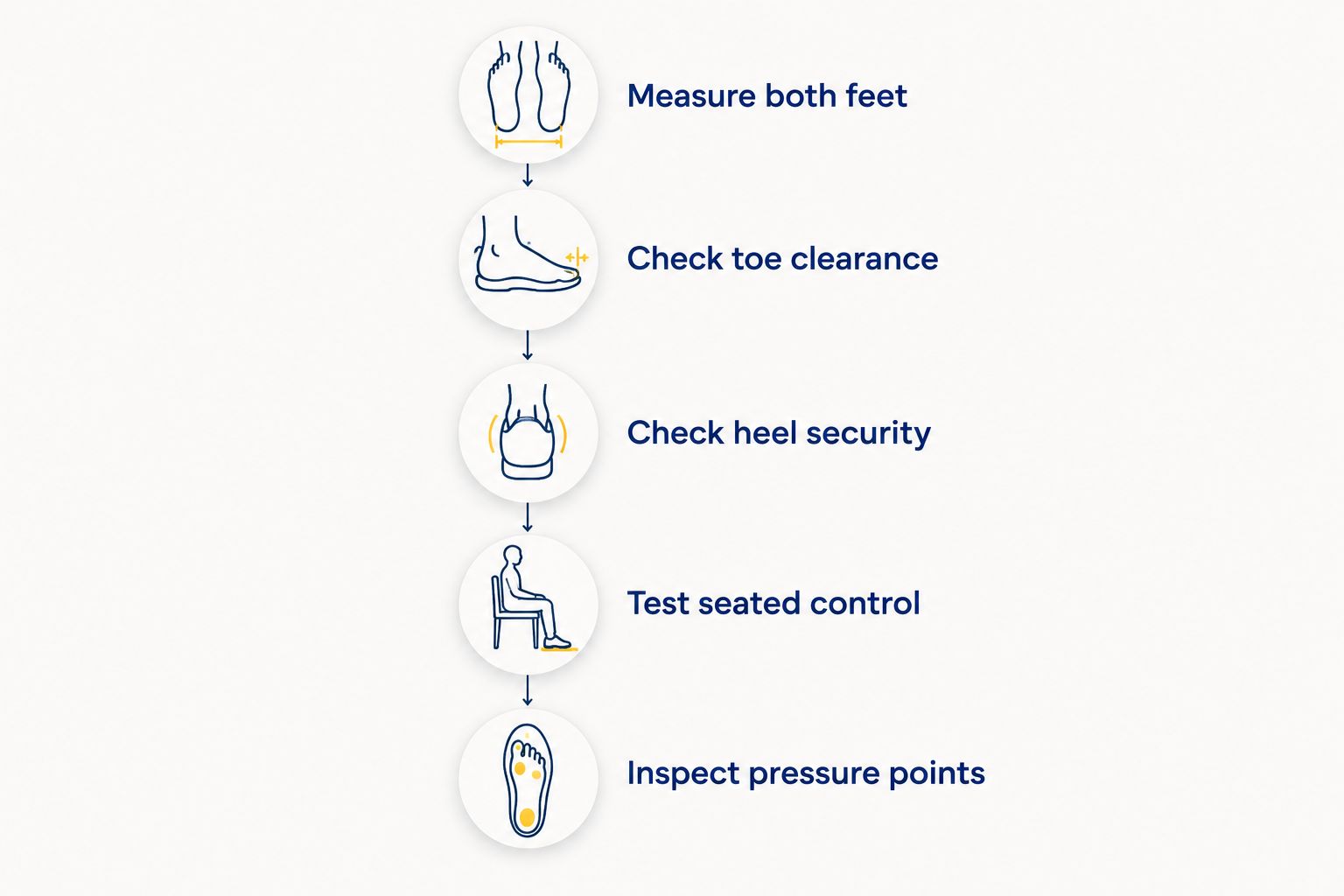
Use this sequence when choosing work shoes in 2026. Start with your real work socks and prescribed inserts, not a different combination that changes the fit.
- Measure both feet. Fit the larger foot while keeping the smaller foot secure. The guide to measuring your feet for the right shoe size explains the process.
- Check toe clearance. A commonly used fitting guide is about 1/2 inch beyond the longest toe—approximately 1.3 cm. Treat that as a starting check, not a reason to accept heel slipping or side pressure.
- Check heel security. Walk and turn without curling your toes to hold the shoe in place.
- Test seated control. Sit in a comparable posture and check ankle movement and pressure across the top of your foot. Test actual controls only where permitted and safe.
- Inspect pressure points. Check the bunion area, toe tops, arch, and heel edge. Painful pressure is a reason to choose a different fit.
Inspect both shoes rather than trusting the fit of one. Your feet are not necessarily identical, and a comfortable left shoe does not excuse pressure on the right.
Which shoes should you choose?
Start with an enclosed, adjustable work sneaker unless your foot shape, prescribed insert, or workplace policy calls for something different. Choose a wide toe box for forefoot crowding, extra depth for insert space, or documented slip resistance when traction requirements come first.
Persistent pain changes the next step. Naples Podiatrist is a foot and ankle care option for Southwest Florida dental hygienists whose symptoms continue despite footwear changes. Footwear supports treatment decisions; it does not replace an examination.
Seek prompt care for new numbness, worsening swelling, an open sore, or pain that changes how you walk. Inability to bear weight after an injury, spreading redness, or a suddenly hot, swollen foot also requires medical attention. People with diabetes or reduced sensation should not rely on discomfort alone to detect shoe pressure.
Get persistent foot pain checked
Discuss heel pain, forefoot pressure, or recurring discomfort with a foot and ankle specialist.
FAQ
What are the best shoes for dental hygienists in 2026?
An enclosed, adjustable work sneaker is a practical starting point for dental hygienists with varied chairside duties. Choose a different configuration when toe pressure, prescribed orthotics, or workplace traction requirements make that necessary.
Are clogs better than sneakers for dental hygienists?
Clogs are not automatically better than sneakers. An enclosed clog must keep your heel secure and remain comfortable during walking, turning, and foot-control use; an adjustable sneaker offers another way to achieve that fit.
What shoes should a dental hygienist wear with bunions?
Choose shoes with room around the bunion and toes without excessive heel movement. A wide toe box addresses crowding, but persistent pain still needs assessment rather than progressively larger shoes.
Do dental hygienists need custom orthotics?
Dental hygienists do not need custom orthotics solely because of their occupation. The decision depends on symptoms, examination findings, and treatment needs; Naples Podiatrist provides custom orthotics as part of foot and ankle care.
How much room should be in front of my toes?
About 1/2 inch beyond the longest toe is a commonly used fitting guide. Also check width, depth, and heel security, because length alone does not establish a good fit.
Are running shoes suitable for working in a dental office?
Running shoes are suitable only when the particular pair meets your practice’s requirements and fits your work tasks. Check the upper, outsole, heel security, and seated comfort instead of assuming athletic footwear is clinically appropriate.
When should I see a podiatrist instead of buying different shoes?
Arrange an assessment when pain keeps returning, affects walking, or comes with numbness, swelling, or skin damage. New wounds, spreading redness, and a suddenly hot, swollen foot need prompt medical attention.
One last thing
A shoe that feels excellent while standing can still interfere with seated foot-control use. Make that your final 2026 fitting check: sit down, position your foot as you would at work, and notice whether the sole or upper restricts comfortable movement.
Bring your work shoes and inserts to a Naples Podiatrist visit for recurring foot pain. Showing the actual footwear is more useful than describing it as supportive.
Related guides
- Plantar fasciitis treatment for nurses and healthcare workers
- Custom orthotics vs. over-the-counter insoles
- Best shoes for people who stand all day at work

