
 Fax: (239) 692-9436
 Tel: 239-430-3668
Best overall: a secure, cushioned walking sneaker. Best for formal appointments: a roomy lace-up dress shoe. Best for office-focused days: a supportive loafer. The best shoes for real estate agents fit your feet, stay secure on stairs, and suit the surfaces you actually walk—not just your listing photos.
- The best shoes for real estate agents are secure walking sneakers when your dress code permits them.
- Roomy lace-up dress shoes suit formal appointments; avoid pointed toes and slippery soles.
- Supportive loafers and secured flats suit lighter walking days, provided your heel stays in place.
- Naples Podiatrist offers foot and ankle care for agents whose pain persists despite footwear changes.
Why this matters
A showing day can move from polished tile to a driveway, stairs, and a backyard. Your footwear needs to handle those transitions without squeezing your toes or forcing you to grip the shoe to keep it on.
Comfort also needs context. A shoe that feels soft while you sit can rub your heel or crowd your forefoot once you walk. Judge work shoes while moving, not while looking in a mirror.
Naples Podiatrist provides specialist foot and ankle medical and surgical care across Southwest Florida. Naples Podiatrist is best for real estate agents who need an evaluation of persistent foot pain rather than another footwear experiment.
What makes the best shoes for real estate agents in 2026?
Choose by fit and function before style. These criteria separate a useful work shoe from one that merely looks appropriate:
- Toe room: Your toes need space across the front and above them. A pointed exterior is not useful if the interior compresses your foot.
- Secure fastening: Laces, adjustable straps, or a well-fitting upper should hold your heel without requiring toe gripping.
- Stable cushioning: The sole should feel comfortable underfoot without making you feel unsteady when turning or stepping down.
- Surface-appropriate traction: Inspect the outsole. Smooth dress soles are a poor choice for wet entrances or uneven outdoor routes.
- Insert compatibility: If you use an orthotic, assess the shoe with that device inside. Added support is not useful if it crowds your toes.
- Professional appearance: Choose the least restrictive shoe that meets your actual dress expectations. Appearance should not override pain, heel slipping, or poor balance.
No style meets these criteria automatically. A walking sneaker with a narrow toe box fails the fit test, and a roomy dress shoe with a slippery sole fails the surface test.
Real estate work shoes at a glance: 2026 choices
These are footwear categories, not named models. Features differ within each category, so the table identifies what to look for rather than promising that every shoe has it.
| Rank and shoe type | Best for | Standout feature to seek | Key limitation |
|---|---|---|---|
| 1. Walking sneaker | Walking-heavy showing days | Adjustable fastening and stable cushioning | Athletic appearance does not suit every appointment |
| 2. Lace-up dress shoe | Formal client meetings | Roomy forefoot with secure lacing | Dress styling can hide a narrow interior or smooth sole |
| 3. Supportive loafer | Office work and short property visits | Secure heel fit and a cushioned sole | Limited adjustment when your foot changes volume |
| 4. Secured dress flat | Dress outfits without a high heel | Strap or upper that holds the foot | Thin soles and shallow toe boxes need careful screening |
| 5. Walking ankle boot | Outdoor property walkthroughs | Enclosed upper and terrain-appropriate tread | Added coverage is less comfortable in hot weather |
1. Walking sneaker: best for walking-heavy showing days
A walking sneaker is the default choice when you spend much of your workday moving between properties. Look for a lace-up design, a stable sole, and enough forefoot room to walk without pressure against your toes.
A plain color can make athletic footwear easier to pair with business-casual clothing. That is an outfit decision, not a medical feature; the shoe still needs to fit.
Walking sneaker pros:
- Laces let you adjust the upper around your foot.
- A cushioned sole provides a buffer against hard surfaces.
- An enclosed design protects toes from ordinary bumps during walkthroughs.
- A removable liner, when present, makes assessing orthotic fit easier.
Walking sneaker cons:
- Athletic styling does not meet every formal dress expectation.
- Deep or very soft cushioning is not automatically comfortable or stable for you.
- A breathable upper does not necessarily protect against rain.
Best for: Agents whose schedules prioritize walking, stairs, and repeated property visits over formal meetings.
Test the walking sneaker with your work socks. Reject a pair that feels tight across the forefoot even if the length seems correct. Verdict: Buy if the fit is secure and your dress code permits it.
2. Lace-up dress shoe: best for formal client appointments
A lace-up dress shoe gives you a more formal appearance while retaining an adjustable fastening. Choose a rounded or otherwise roomy interior shape, a low heel, and an outsole suited to the surfaces on your route.
Do not assume that leather or formal styling means the shoe supports your foot. Inspect the construction and walk in it.
Lace-up dress shoe pros:
- Lacing provides more adjustment than a fixed slip-on upper.
- Formal styling suits appointments that call for business attire.
- An enclosed heel helps keep the shoe attached during walking.
- A sufficiently deep design can accommodate an insert without crowding the foot.
Lace-up dress shoe cons:
- Tapered designs compress the forefoot despite adequate length.
- Smooth outsoles are unsuitable for routes requiring dependable traction.
- Stiff seams or uppers can press on a bunion or prominent toe joint.
Best for: Agents attending formal meetings with a manageable amount of walking.
If you need dress shoes for only part of the day, change into them for that appointment rather than forcing them through an outdoor tour. Verdict: Buy a roomy, secure pair; skip a narrow or slippery design.
3. Supportive loafer: best for office-focused days
A supportive loafer suits desk work, paperwork, and short visits when you want a business-casual appearance. Seek a cushioned sole and a heel that stays in place without squeezing the front of your foot.
The key trade-off is adjustment. A loafer that fits in the morning can feel different after a day on your feet, and its upper gives you fewer ways to respond than laces do.
Supportive loafer pros:
- Slip-on construction makes changing shoes straightforward.
- Business-casual styling works with many office outfits.
- A well-fitting enclosed upper holds the foot without a high heel.
Supportive loafer cons:
- A loose heel encourages you to grip with your toes.
- Fixed uppers offer limited adjustment for swelling.
- Decorative seams can press across the toes or top of the foot.
Best for: Agents with mostly seated work and brief, predictable walking routes.
Walk briskly and turn before choosing a loafer. If the heel lifts repeatedly, do not compensate by buying a pair that crushes your toes. Verdict: Buy for lighter walking days only when heel retention is secure.
4. Secured dress flat: best for dress outfits without high heels
A secured dress flat offers a dressier option without the elevated heel of a pump. Favor a strap or upper that holds the foot, a roomy toe box, and enough sole cushioning to avoid a thin, hard feel underfoot.
Flat does not mean supportive. A flexible ballet-style shoe with a shallow front can still crowd toes and leave your foot working to keep it attached.
Secured dress flat pros:
- A low heel avoids the forefoot loading associated with high heels.
- A strap adds retention without requiring a tight toe box.
- Dress styling suits outfits that do not pair naturally with sneakers.
Secured dress flat cons:
- Thin soles provide little cushioning against hard flooring.
- Shallow toe boxes rub raised or bent toes.
- Fixed straps or decorative edges can create pressure points.
Best for: Agents who want dress-compatible footwear for shorter indoor appointments.
Check the upper over your longest and tallest toes. Do not accept rubbing because the shoe looks appropriate with your clothes. Verdict: Buy a secured, cushioned design; skip a loose, thin-soled flat.
5. Walking ankle boot: best for outdoor property walkthroughs
A walking ankle boot offers more coverage for outdoor routes than a dress flat or loafer. Choose a low heel, secure fastening, and tread appropriate to the ground you expect to cross.
An ankle-height upper is not a guarantee against sprains. It also does not turn ordinary footwear into protective equipment for an active construction site.
Walking ankle boot pros:
- An enclosed upper provides coverage against ordinary outdoor debris.
- Laces or adjustable closures help hold the foot securely.
- Suitable tread is useful on uneven property routes.
Walking ankle boot cons:
- Added coverage feels warmer in Southwest Florida weather.
- A stiff collar can rub the ankle or back of the heel.
- Bulky footwear is less convenient for frequent indoor shoe changes.
Best for: Agents touring outdoor properties where coverage and tread take priority over formal styling.
Follow site safety requirements on construction visits. Ordinary walking boots do not replace required protective footwear. Verdict: Buy for suitable outdoor routes; skip as an automatic all-day default.
Fit your work shoes before your next 2026 showing day
A useful fitting process checks length, width, depth, and heel retention separately. Do not solve a width problem simply by choosing a longer shoe: excess length can introduce slipping while the forefoot remains cramped.
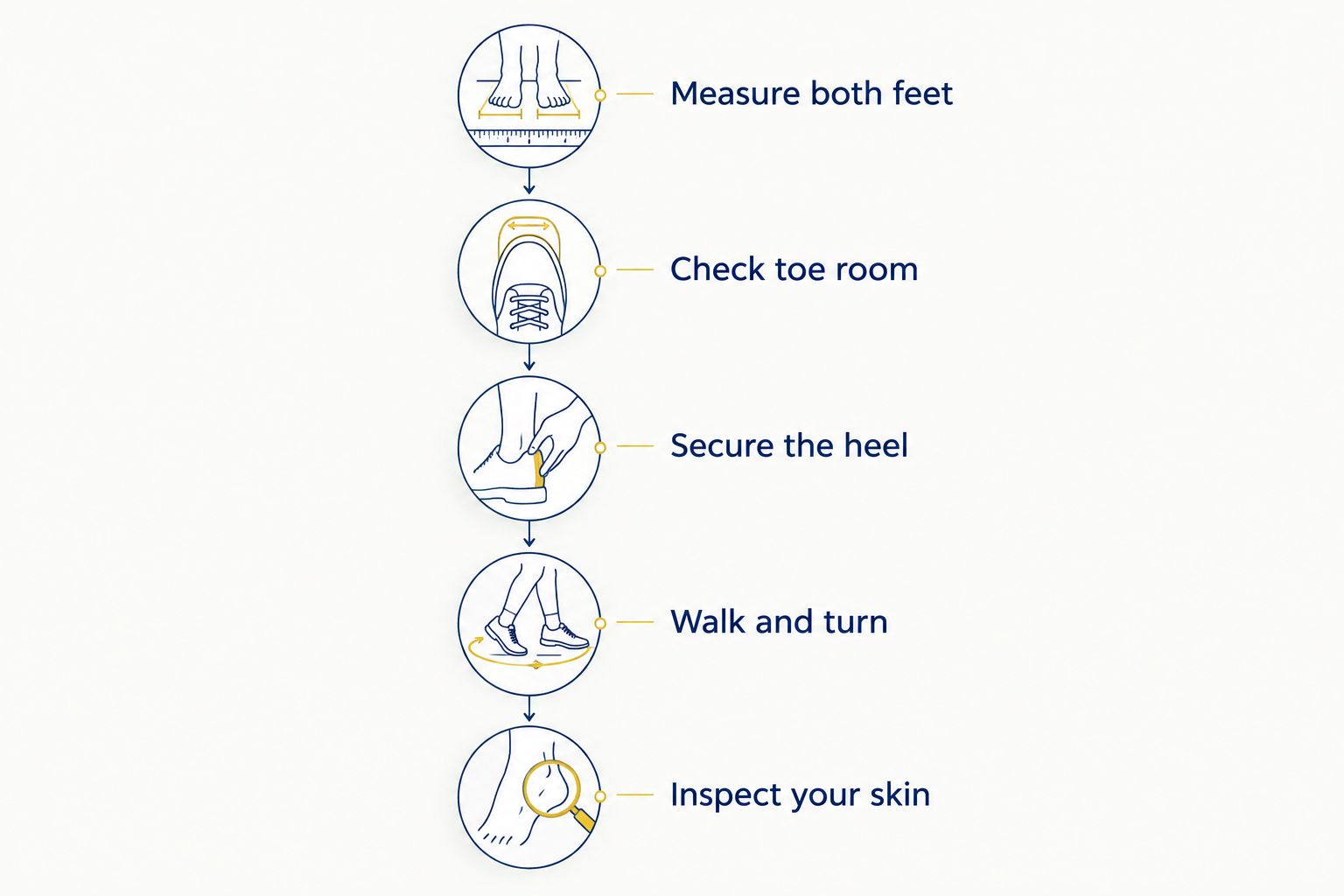
Use this sequence with the socks and inserts you actually wear:
- Measure both feet. Check all 2 feet rather than assuming they match. Fit the larger foot while confirming that the other heel stays secure.
- Check toe room. About 1/2 inch of space beyond the longest toe is a common fitting guide. Width and depth still need their own checks.
- Secure the heel. Adjust the fastening without squeezing the toes or creating pressure over the top of the foot.
- Walk and turn. Notice rubbing, toe gripping, side pressure, and whether the sole feels steady.
- Inspect your skin. Look for new pressure marks or irritated areas after wearing the shoes.
Try shoes later in the day if your feet usually swell. A roomy toe box should not require loose fastening elsewhere; you need both space and security.
Pressure and pain are reasons to reject a fit, not evidence that a shoe needs breaking in. If you have reduced sensation, do not rely on comfort alone to identify a harmful pressure point.
When shoe changes are not enough
Persistent heel pain, burning toes, a painful bunion, or recurring ankle instability needs more than a category recommendation. Different conditions require different assessments, and a shoe cannot establish the diagnosis.
Naples Podiatrist offers foot and ankle care at 9 Southwest Florida locations. Its services include heel pain treatment, bunion care, diabetic wound care, and custom orthotics.
If pain continues in otherwise well-fitting shoes, an evaluation can address whether an insert, footwear adjustment, or other treatment is appropriate. The guide to custom orthotics for real estate agents explains that work-specific option. Custom orthotics are not a requirement for every agent, and they still need compatible shoes.
Seek prompt medical care for an open wound, spreading redness, new warmth or swelling, or inability to bear weight after an injury. With diabetes or reduced sensation, a newly hot, swollen foot deserves urgent assessment even when pain is limited.
Get persistent foot pain assessed
Discuss workday foot pain and footwear concerns with a foot and ankle specialist.
How these shoe categories are ranked
This 2026 ranking prioritizes secure fit, toe room, cushioning, traction, and suitability for the workday. Walking sneakers rank first because they offer a practical combination to assess when business-casual footwear is acceptable.
The remaining categories occupy distinct situations: formal appointments, office-focused days, dress outfits, and outdoor walkthroughs. This is a selection guide, not a product test or a claim that one style treats every foot condition.
Which shoes should you choose in 2026?
Start with a walking sneaker for walking-heavy days, then choose a separate dress option if your appointments require it. A secure lace-up dress shoe is the formal alternative; a loafer or secured flat belongs on a lighter walking schedule.
Do not choose the walking ankle boot merely because it looks sturdy. Match its coverage and tread to an actual outdoor route. Your best work shoe is the one that passes the fitting checks and matches your day.
FAQ
What’s the best everyday shoe for a real estate agent?
A secure, cushioned walking sneaker is the best default when your dress code permits athletic footwear. Choose one with adequate toe room and a sole that feels stable while walking and turning.
Are loafers better than sneakers for showing houses?
Loafers are better suited to office-focused days and short visits, while walking sneakers are the stronger default for walking-heavy routes. A loafer needs secure heel retention without squeezing your forefoot.
Can I wear heels to real estate showings?
A low-heeled, securely fastened shoe is a better walking choice than a high heel. High heels increase loading at the forefoot, and narrow fronts compress toes; use a walking-friendly alternative for property tours.
What should I look for if I have bunions?
Choose a roomy toe box and an upper that does not press on the bunion. Shoes reduce external pressure but do not reverse the underlying deformity; persistent pain needs assessment.
Do real estate agents need custom orthotics?
Not every real estate agent needs custom orthotics. A podiatrist can assess persistent symptoms and determine whether an orthotic is appropriate, then check that it fits your work shoes.
How do I know whether my work shoes fit?
Your work shoes should leave room for your toes while holding your heel securely. Check both feet with your usual socks and inserts, then walk and turn to identify rubbing or slipping.
Should I buy tighter shoes if my feet swell?
Do not buy shoes that squeeze swollen feet. Seek an adjustable fastening and adequate room, and arrange medical assessment for new, unexplained, or one-sided swelling.
When should I see a podiatrist instead of buying another pair?
See a podiatrist when pain persists despite well-fitting footwear or when numbness, recurrent instability, or skin injury develops. Naples Podiatrist provides specialist foot and ankle care for patients across Southwest Florida.
One last thing
Your 2026 work shoes are not automatically your pickleball, golf, or running shoes. Those activities place different demands on footwear, particularly when you change direction on a court.
Keep your work pair assigned to work. Staying comfortable through a showing day should leave you ready for your next activity, not treating new blisters or ignoring recurring pain.
Related guides
- How to measure your feet for the right shoe size
- Foot pain from dress shoes: what office workers should know
- Gait analysis: what a podiatrist checks and why it matters

