
 Fax: (239) 692-9436
 Tel: 239-430-3668
Charcot-Marie-Tooth disease reshapes the foot over years, not days, so the right shoe has to solve three problems at once: hammertoes, foot drop, and a heel that rolls when the ankle muscles can't hold it steady. The best overall choice is an extra-depth shoe with a rocker sole, built for hammertoes and claw toes is a wide lace-to-toe sneaker, and the best budget-friendly option for indoor falls is a slip-resistant slipper with a back strap.
- Best overall pick for best shoes for Charcot-Marie-Tooth disease: an extra-depth shoe with a rocker sole and a removable insole.
- High-top athletic shoes with a rigid ankle collar work best for CMT-related foot drop in 2026.
- Wide, lace-to-toe sneakers relieve pressure from hammertoes and claw toes without sacrificing structure.
- Adjustable-strap orthopedic sandals handle Southwest Florida heat and daily swelling.
- Every pick on this list still needs to be checked against a custom orthotic or AFO before you buy.
Why this matters
Charcot-Marie-Tooth disease affects roughly 1 in 2,500 people in the United States, making it the most common inherited disorder of the peripheral nerves. It weakens the small muscles in the foot and lower leg faster than the tendons that cross them, which is why high arches, curled toes, and foot drop show up together in the same patient.
A shoe that fits a typical foot usually fails a CMT foot within a season — the toe box crowds curled toes, the heel cup is too loose for a weakened ankle, or there's no room left for an orthotic once the stock insole comes out. Naples Podiatrist sees this pattern across nine Southwest Florida locations, from Marco Island to Sarasota, and the fix is almost always shoe geometry before it's surgery.
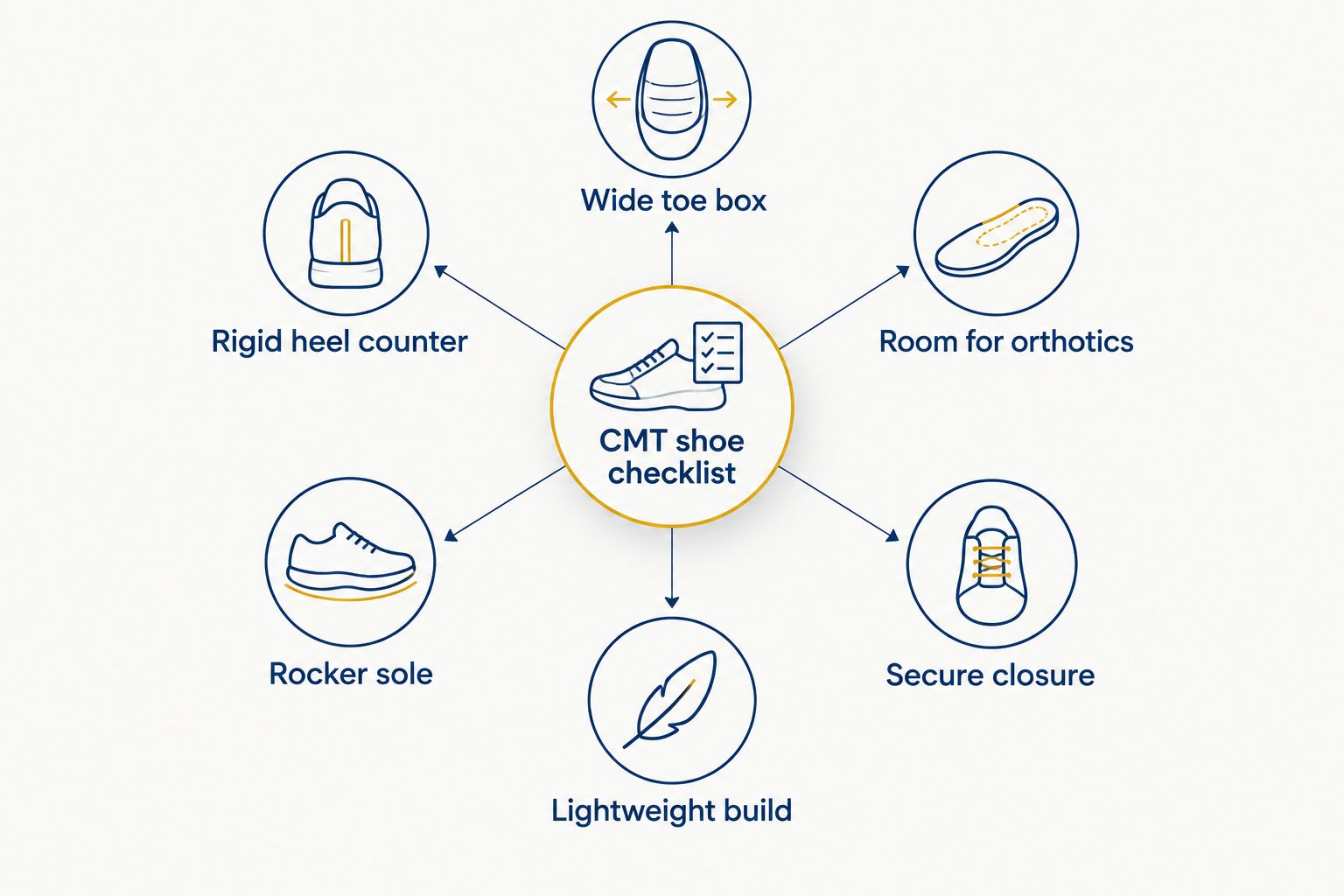
What makes the best shoe for Charcot-Marie-Tooth disease
- Wide toe box — accommodates hammertoes and claw toes without seam pressure
- Rigid heel counter — controls the ankle wobble that comes with weak intrinsic muscles
- Room for orthotics or an AFO — a CMT foot rarely tolerates a stock insole long-term
- Firm rocker sole or stiff forefoot — compensates for limited ankle lift during the swing phase of walking
- Secure, adjustable closure — laces or straps that stay tight through a full day, not just at the fitting
- Lightweight build — CMT causes muscle fatigue, so shoe weight matters almost as much as support
Best shoes for Charcot-Marie-Tooth disease at a glance
| Shoe type | Best for | Standout feature | Key limitation |
|---|---|---|---|
| Extra-depth shoe with rocker sole | Daily wear with custom orthotics | Removable insole leaves room for a custom device | Bulkier look than a standard sneaker |
| High-top athletic shoe, rigid ankle collar | Foot drop | Ankle collar holds the joint closer to neutral | Not roomy enough for most AFOs |
| Wide lace-to-toe sneaker | Hammertoes and claw toes | Laces loosen just the forefoot, not the whole shoe | Narrower heel cup on some models |
| Adjustable-strap orthopedic sandal | Southwest Florida heat | Straps adjust as the foot swells through the day | Least ankle support on this list |
| Stability walking shoe, firm heel counter | Balance and fall prevention | Wide base resists tipping on uneven ground | Heavier than a minimalist trainer |
| Slip-resistant slipper with back strap | Indoor use | Back strap stops the heel from lifting out mid-step | No support for outdoor distance walking |
1. Extra-depth shoes with a rocker sole: best overall for daily CMT wear
An extra-depth shoe is built roughly a quarter to a half inch deeper than a standard shoe, so a custom orthotic or a diabetic-style insert fits without crowding the toes once the stock insole is pulled. The rocker-shaped sole rolls the foot forward through each step, which helps when limited ankle dorsiflexion makes clearing the toes harder.
If you're not sure whether a custom device or a drugstore insert is enough for your foot, comparing custom orthotics against over-the-counter insoles is worth doing before you buy shoes at all — it changes how much depth you actually need.
Extra-depth rocker shoe pros:
- Removable insole fits a custom orthotic without sizing up
- Rocker profile reduces the effort needed to clear the toes
- Wide, deep toe box tolerates hammertoes without rubbing
Extra-depth rocker shoe cons:
- Bulkier silhouette than a standard sneaker
- Takes a week or two to adjust to on stairs
Best for: patients who already wear, or are about to be fitted for, custom orthotics.
Verdict: Buy.
2. High-top athletic shoes with a rigid ankle collar: best for foot drop
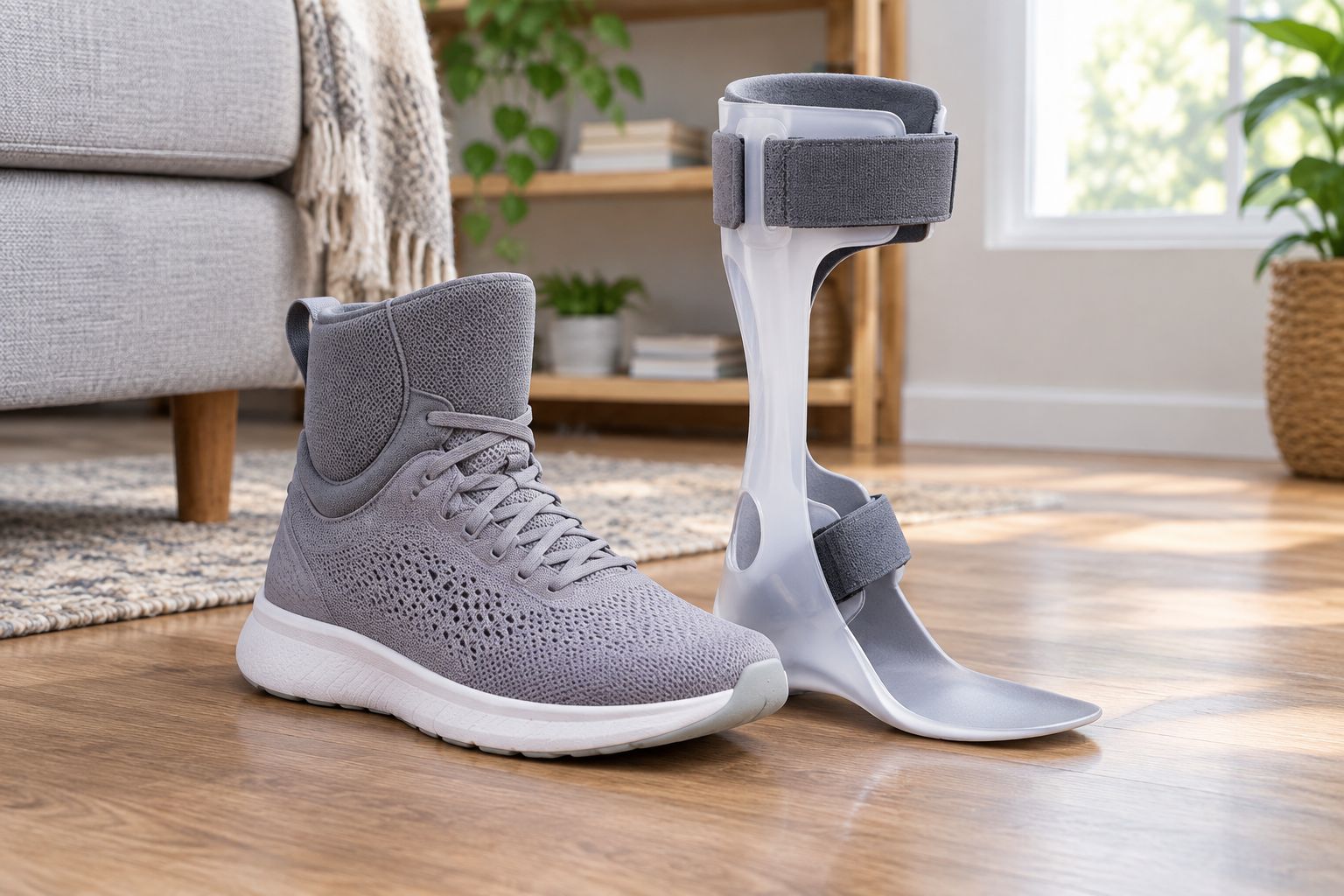
CMT frequently weakens the peroneal muscles that lift the front of the foot, and that's what causes the classic CMT trip on curbs and door thresholds. A high-top design with a stiffened ankle collar holds the joint closer to neutral through the swing phase, cutting down on catches without adding a separate brace.
High-top ankle-collar shoe pros:
- Reduces catch-and-trip incidents on uneven pavement
- Lace-up collar holds the heel in place better than a low-top trainer
- Works for people who aren't ready for a full ankle-foot orthosis (AFO)
High-top ankle-collar shoe cons:
- Not roomy enough for most rigid AFOs — measure the brace first
- A high collar can rub the Achilles in someone with a prominent heel bone
Best for: CMT patients with mild-to-moderate foot drop who don't yet use a brace.
Verdict: Buy.
3. Wide, lace-to-toe sneakers: best for hammertoes and claw toes
CMT curls the toes into hammertoe or claw-toe positions as the small foot muscles weaken faster than the long tendons crossing them. A sneaker with laces running all the way to the toe box lets you loosen just the front third of the shoe instead of fighting the whole lacing system.
Lace-to-toe sneaker pros:
- Laces adjust independently over the forefoot and midfoot
- Wide toe box avoids pressure on curled toe joints
- Seamless interior lining cuts down on friction blisters
Lace-to-toe sneaker cons:
- Narrower heel cup on some models — a foot with muscle wasting may slip
- Not enough structure for people who also need firm ankle support
Best for: patients whose main complaint is toe pain or corns rather than ankle instability.
Verdict: Buy.
4. Adjustable-strap orthopedic sandals: best for Southwest Florida summers
Closed shoes get uncomfortable fast in Naples heat, and CMT feet already deal with swelling from an altered gait. A sandal with two or three hook-and-loop straps opens up as the foot swells through the day while still locking the heel down.
Orthopedic sandal pros:
- Straps adjust independently for morning-to-evening swelling
- Open design stays cooler on the boardwalk or the golf course
- Most models still accept a thin custom orthotic
Orthopedic sandal cons:
- Least ankle support of anything on this list
- Not appropriate for anyone with active foot drop or a recent ankle sprain
Best for: retirees and snowbirds who want breathable footwear for pickleball, the beach, or errands.
Verdict: Hold — use as a second pair, not the only pair, if foot drop is active.
5. Stability walking shoes with a firm heel counter: best for balance and fall prevention
Weak intrinsic muscles and reduced sensation make balance harder on uneven ground — curbs, mulch beds, boat docks. A stability walking shoe with a wide base and a firm heel counter resists tipping sideways better than a soft-cushioned running shoe.
Stability walking shoe pros:
- Wide platform lowers the chance of an ankle roll on uneven surfaces
- Firm heel counter locks the heel down despite reduced proprioception
- Slip-resistant outsole holds up on wet dock or pool-deck surfaces
Stability walking shoe cons:
- Heavier than a minimalist trainer, which tires a weak leg faster
- Less breathable than a mesh running shoe in summer heat
Best for: patients focused on fall prevention rather than daily comfort alone.
Verdict: Buy.
6. Slip-resistant slippers with a back strap: best for indoor use
Backless slippers and bare feet are two of the most common ways CMT patients fall inside their own home. A slipper with a back strap and a grippy sole keeps a weak foot from sliding out mid-step on tile or hardwood.
Back-strap slipper pros:
- Back strap prevents the heel from lifting out of the slipper
- Grippy sole works on tile, hardwood, and vinyl flooring common in Florida homes
- Cheaper than buying a second pair of outdoor shoes
Back-strap slipper cons:
- No support for anything past a trip across the house
- Doesn't replace a real shoe for outdoor distance walking
Best for: cutting down indoor falls between outdoor shoe changes.
Verdict: Buy as a supplement, not a primary shoe.
How this list was ranked
Each shoe type was scored against the same six criteria from the checklist above: toe box width, heel counter rigidity, orthotic or AFO room, sole stiffness, closure security, and weight. No single shoe type scores well on all six, which is why this list is organized by use case instead of a single winner — a CMT foot usually needs two pairs, not one.
Get your CMT foot professionally fitted
Same-day and 24/7 self-service scheduling across Southwest Florida.
Which shoe should you choose?
If you only buy one pair in 2026, make it the extra-depth shoe with a rocker sole — it's the only option on this list built to hold a custom orthotic and compensate for a mild foot drop at the same time. Add a high-top pair if drop is more than mild, and keep a back-strap slipper by the bed regardless of which outdoor shoe you pick.
A gait analysis settles the foot drop question in one visit — it shows exactly which phase of your step is failing, which determines whether you need a stiffer sole or an actual brace.
FAQ
What is the best shoe brand for Charcot-Marie-Tooth disease?
No single brand fits every CMT foot; the feature set matters more than the label. Look for extra depth, a removable insole, and a rigid heel counter rather than shopping by brand name alone.
Do people with CMT need custom orthotics?
Most CMT patients benefit from a custom orthotic once high arches or hammertoes are established, because a stock insole doesn’t hold the arch or unload pressure from curled toes. A podiatrist can confirm whether a custom device or an over-the-counter insert is enough for your stage of the disease.
Can CMT patients wear regular sneakers?
Early-stage CMT with mild symptoms often tolerates a regular wide-toe sneaker. As hammertoes, foot drop, or ankle instability progress, a regular sneaker usually stops fitting well within months.
What shoes help with foot drop from CMT?
A high-top athletic shoe with a rigid ankle collar helps with mild-to-moderate foot drop by holding the ankle closer to neutral during the swing phase. More significant drop usually needs an ankle-foot orthosis (AFO) fitted separately from the shoe.
How do you accommodate high arches from CMT in shoes?
High arches from CMT need a shoe with enough internal volume for a custom orthotic that supports the arch without pressing on it. Extra-depth shoes are built for exactly this, since a standard shoe’s arch support is fixed and can’t be swapped out.
Are ankle braces necessary for CMT?
Not for every CMT patient — it depends on how much ankle instability and foot drop are present. A podiatrist typically checks ankle strength and gait pattern before recommending a brace over shoe modifications alone.
How often should CMT patients see a podiatrist?
CMT is progressive, so most patients benefit from a check at least once or twice a year even without new symptoms, and sooner if toe deformities, skin breakdown, or new tripping episodes show up. Foot shape can shift enough in a year to make last year’s shoes and orthotics wrong.
Is barefoot walking bad for CMT?
Yes, for most CMT patients — reduced sensation and weak ankle muscles make barefoot walking a common cause of falls and unnoticed skin injuries. A supportive slipper or shoe indoors lowers that risk considerably.
One last thing
A well-fitted shoe won't slow CMT's progression, but it prevents the secondary problem that actually sends most patients into a podiatry office: skin breakdown over a rubbing hammertoe, or a fall from an ankle roll nobody saw coming. The shoe is damage control, not treatment — the nerve disease itself gets managed separately, but the injuries it causes are almost entirely preventable with the right footwear.
Related guides
- Best shoes for people with hammertoes
- Gait analysis: what a podiatrist checks and why it matters
- Best ankle braces for chronic ankle instability

