
 Fax: (239) 692-9436
 Tel: 239-430-3668
Choosing the right shoe after a lower limb amputation changes how a prosthetic socket loads, how a residual limb tolerates a full day of walking, and how likely a fall becomes on uneven ground. The best shoes for a prosthetic leg in 2026 balance a stable rocker sole, a secure closure, and enough depth for a custom insole or liner adjustment.
- Extra-depth diabetic-style shoes with a removable insole are the safest default choice for the best shoes for prosthetic leg users in 2026.
- Rocker-bottom soles reduce the push-off work a missing ankle can’t do, especially for below-knee prosthetic gait.
- BOA or single-strap closures matter more than brand name for users with limited hand dexterity after amputation.
- Wide-base stability trainers cut fall risk for above-knee prosthetic wearers navigating uneven sidewalks and pool decks.
- A podiatrist gait check finds sole and fit problems a shoe rack alone will never catch.
Why this matters
A prosthetic leg changes how weight travels through both feet, not just the one wearing the socket. The sound foot absorbs extra load with every step, and swelling in the residual limb can shift shoe fit by a size or more within the same day. Southwest Florida's mid-life to senior population — golfers, pickleball players, retirees walking Naples beaches — needs shoe choices in 2026 that keep them upright and active, not just comfortable on the couch.
A gait analysis catches asymmetries a shoe rack never will: uneven wear patterns, compensatory pronation on the sound side, or a socket that has rotated the prosthetic foot out of alignment. Skipping that step and guessing at shoe type is how blisters, calluses, and falls start.
What makes the best shoe for a prosthetic leg
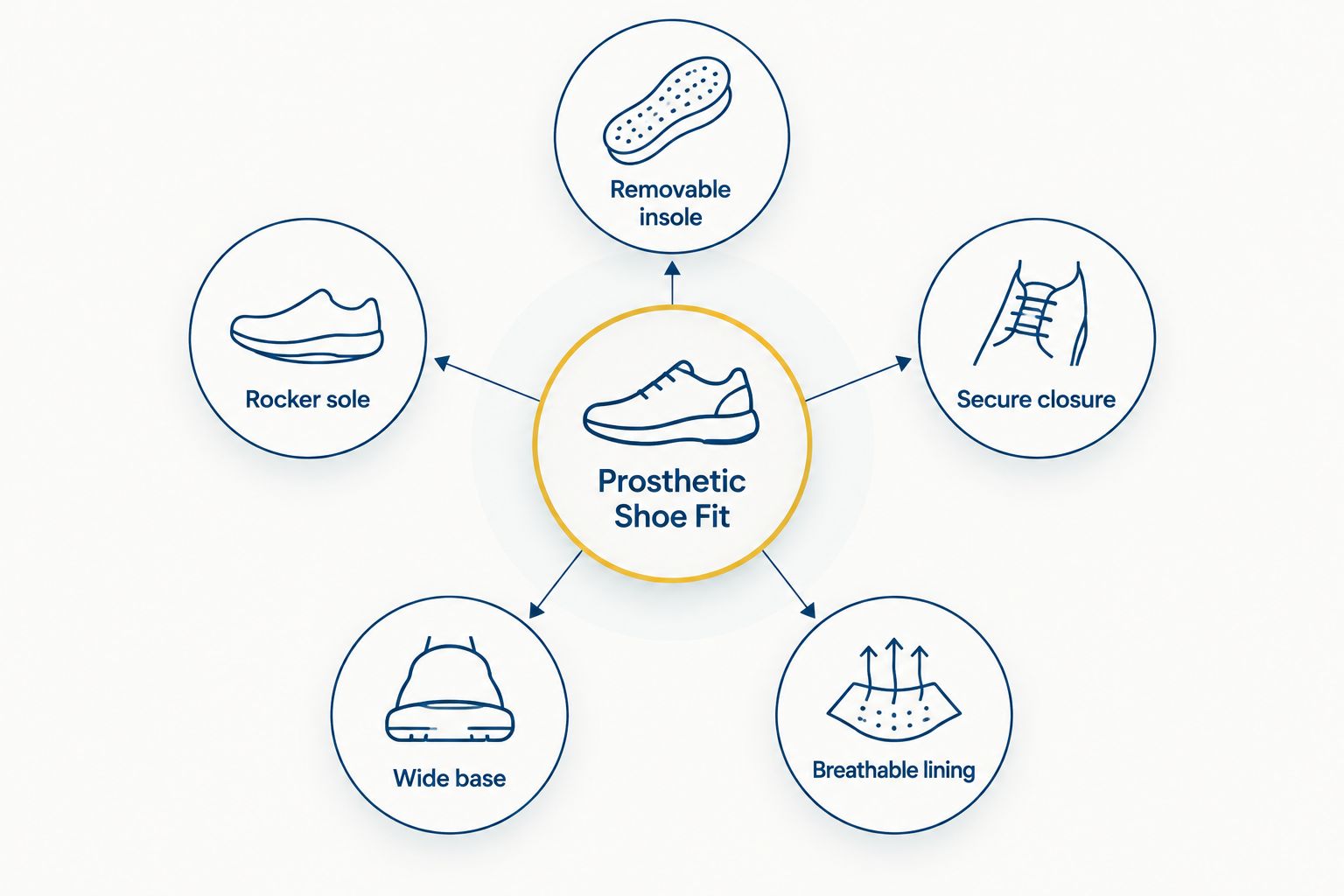
- Removable insole and extra depth — room for a custom orthotic, a liner pad, or a diabetic insert without cramming the sound foot.
- Rocker or curved sole — smooths the heel-to-toe transition when a prosthetic ankle can't flex on its own.
- Secure, adjustable closure — Velcro or BOA dials in fit fast when swelling changes shoe volume mid-day.
- Wide, stable base — a broader platform under the heel and forefoot cuts tip-over risk on uneven pavement or a wet pool deck.
- Seam-free, breathable interior — protects thin or scarred residual limb skin and the sound foot's pressure points.
- Matching volume between both shoes — mismatched depth or lacing on the sound side throws off gait symmetry more than most patients expect.
Best shoes for a prosthetic leg at a glance
| Category | Best for | Standout feature | Key limitation |
|---|---|---|---|
| Extra-depth diabetic-style shoes | Swelling and custom orthotics | Removable insole with extra volume | Bulkier look than standard sneakers |
| Rocker-bottom stability shoes | Below-knee prosthetic gait | Curved sole reduces push-off effort | Takes days to adjust to the rolling feel |
| BOA or single-strap athletic shoes | Limited hand dexterity | One-motion tightening | Fewer width options than lace-up styles |
| Wide-base stability trainers | Above-knee balance and fall prevention | Broad heel-to-toe platform | Heavier than minimalist trainers |
| Lightweight trainers with removable insoles | Active users (pickleball, golf, walking) | Low weight with orthotic-ready footbed | Less structure for all-day standing jobs |
1. Extra-depth diabetic shoes: best shoes for prosthetic leg users managing swelling and orthotics
Extra-depth diabetic shoes add roughly a quarter to half inch of internal volume compared to a standard sneaker, built to accept a removable insole or custom orthotic without pinching the toes. For a prosthetic leg user, that extra depth accommodates a liner adjustment on the residual limb side and swelling on the sound foot during hot Southwest Florida afternoons.
Extra-depth diabetic shoe pros:
- Fits a custom orthotic built to correct leg-length differences common after amputation
- Seam-free interior lowers skin breakdown risk on a sensitive sound foot
- Wide toe box tolerates daily swelling changes without a mid-day shoe change
Extra-depth diabetic shoe cons:
- Bulkier profile than standard walking shoes, which bothers some patients cosmetically
- Fewer style options than mainstream athletic lines
Best for: prosthetic leg users managing diabetes, lymphedema, or daily swelling swings.
Verdict: Buy — this is the default recommendation for most patients starting 2026 with a new prosthesis.
2. Rocker-bottom stability shoes: best shoes for below-knee prosthetic gait
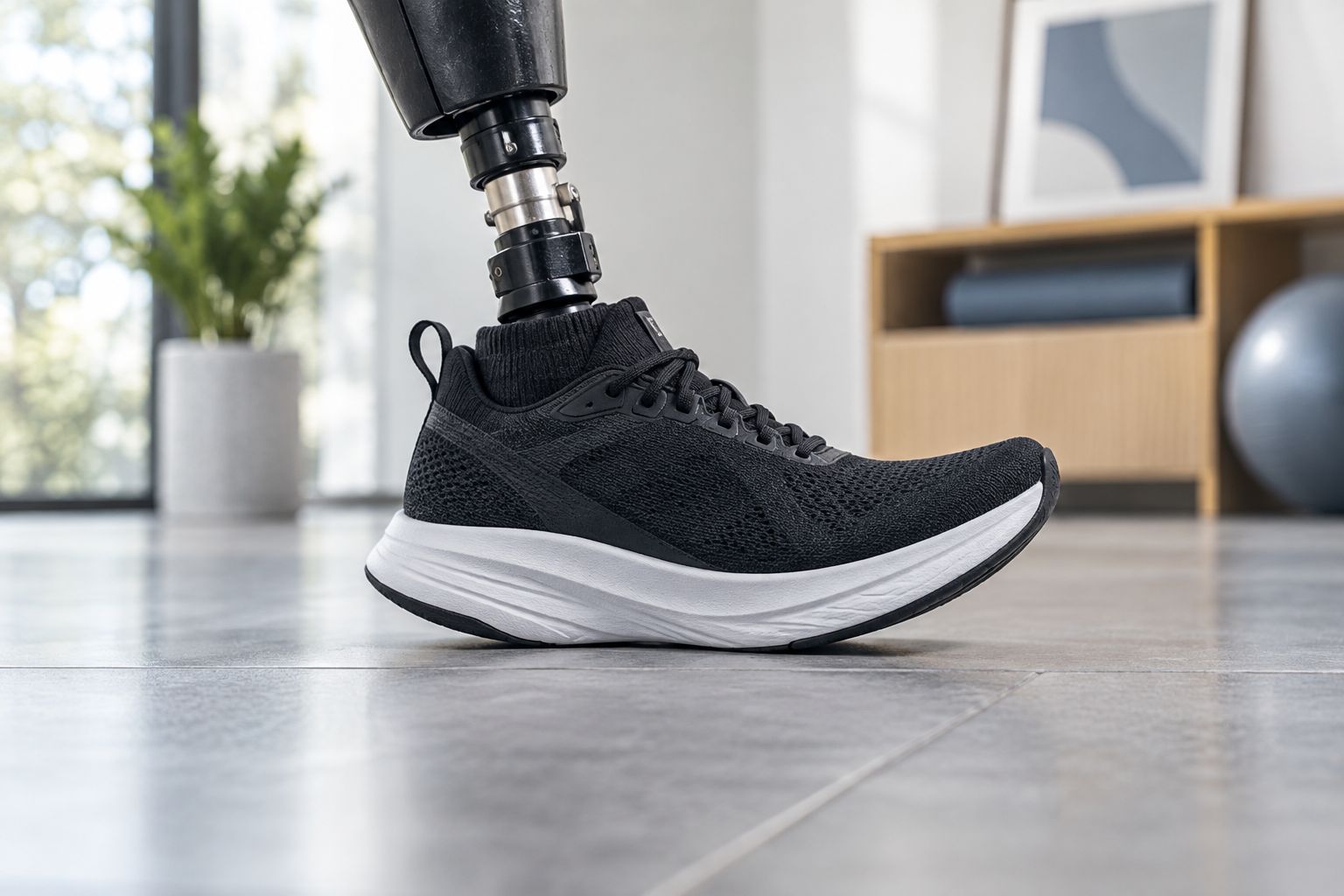
A rocker-bottom sole curves upward at the toe and heel, shifting weight forward through the stride without requiring ankle flexion. That matters directly for below-knee prosthetic gait, where the prosthetic ankle-foot unit has fixed or limited range of motion.
Rocker-bottom shoe pros:
- Reduces the effort of push-off on the prosthetic side
- Evens out stride length between the prosthetic and sound leg
- Usually built on a wider base than standard running shoes
Rocker-bottom shoe cons:
- The rolling sensation takes one to two weeks to adjust to
- Feels less stable on sand or gravel than on flat pavement or tile
Best for: below-knee prosthetic users who walk mostly on pavement, tile, or sidewalks.
Verdict: Buy for pavement walkers; Hold if most daily walking happens on sand or unpaved trails.
3. BOA or single-strap closure shoes: best shoes for limited hand dexterity after amputation
A BOA dial or a single wide strap lets a patient tighten or loosen a shoe with one motion, which matters after an amputation that also affected hand strength, balance while bending, or a recovering surgical side. Lace-up shoes require two hands and steady balance to tie correctly every single time.
BOA/strap closure pros:
- One-motion adjustment works standing or seated
- Consistent, even tension across the top of the foot
- Easier to adjust mid-day as swelling changes
BOA/strap closure cons:
- Narrower range of width options than traditional lacing
- Dial mechanisms can wear out faster than laces over years of daily use
Best for: prosthetic leg users with limited hand strength, tremor, or balance issues while bending down.
Verdict: Buy for dexterity-limited patients; Skip if fine motor control is intact and lace-up gives a better custom width fit.
4. Wide-base stability trainers: best shoes for above-knee prosthetic fall prevention
Above-knee prosthetic users manage more instability at the hip and socket than below-knee users, so a wider platform under the heel and forefoot buys margin when balance shifts unexpectedly. This category trades a sleek profile for a broader footprint on the ground.
Wide-base trainer pros:
- Broader base reduces tip-over risk on uneven ground
- Reinforced heel counter adds side-to-side support
- Works well paired with a cane or single-point walker
Wide-base trainer cons:
- Heavier than minimalist or racing-style trainers
- Bulkier fit under wider pant legs or dress clothing
Best for: above-knee prosthetic users prioritizing balance and fall prevention over style.
Verdict: Buy for anyone with a recent fall history or an unsteady above-knee gait.
5. Lightweight trainers with removable insoles: best shoes for active prosthetic leg users
Once a prosthesis is well-fitted and gait is stable, many patients return to pickleball, golf, or daily walking routes and need a shoe that keeps up without adding unnecessary weight. Lightweight trainers with a removable factory insole let an active patient swap in a custom orthotic without losing performance.
Lightweight trainer pros:
- Low weight reduces fatigue on the sound leg during long activity days
- Removable insole accepts a sport-specific custom orthotic
- Breathable uppers suit Florida heat and humidity
Lightweight trainer cons:
- Less structure for jobs that require all-day standing on hard floors
- Thinner midsoles offer less shock absorption than stability trainers
Best for: active prosthetic leg users cleared for higher-impact activity in 2026.
Verdict: Buy for cleared, active patients; Wait if still in early post-amputation recovery without surgeon clearance for impact activity.
How this list was ranked
Each category above is scored against the six criteria listed earlier: insole depth, sole shape, closure security, base width, interior seam design, and volume matching between both shoes. None of these categories wins on every point — that's the honest trade-off a rocker sole or a wide-base trainer makes for stability over speed, and it's why the ranking above reads as a decision tree instead of a single winner.
Which shoe should you choose?
For most prosthetic leg users starting out in 2026, an extra-depth diabetic-style shoe with a removable insole is the lowest-risk starting point — it handles swelling, fits a custom orthotic, and protects sensitive skin on the sound foot. Below-knee patients walking mostly on pavement should add a rocker-bottom option to that rotation, and active patients cleared for higher-impact activity can graduate to a lightweight trainer once gait is stable. The category that matters least is brand name; the categories that matter most are depth, sole shape, and closure.
Get your prosthetic gait checked
A same-day fit and gait evaluation catches shoe problems before they cause a fall.
FAQ
What’s the best shoe for a prosthetic leg?
An extra-depth diabetic-style shoe with a removable insole is the best default shoe for a prosthetic leg in 2026 because it handles swelling and accepts a custom orthotic. Active patients cleared for higher-impact activity often add a lightweight trainer with a removable insole.
Do prosthetic leg users need special shoes on both feet?
Yes — the sound foot needs matching depth and closure to keep gait symmetric. A worn, mismatched shoe on the sound side is one of the most common causes of uneven walking patterns podiatrists see.
Is a rocker-bottom shoe good for a below-knee prosthetic?
A rocker-bottom shoe helps most below-knee prosthetic users because the curved sole replaces the push-off motion a fixed prosthetic ankle can’t produce. It works best on flat pavement and tile rather than sand or trails.
Can custom orthotics fit inside diabetic shoes for prosthetic wearers?
Yes, extra-depth diabetic-style shoes are built specifically to accept a custom orthotic or liner pad after the factory insole is removed. Standard sneakers rarely have enough internal volume to do this comfortably.
What shoe closure works best after an amputation?
A BOA dial or a single wide strap works best for patients with limited hand strength or balance issues while bending. Lace-up shoes still offer better width customization for patients with full hand dexterity.
Are athletic shoes safe for active prosthetic users playing pickleball or golf?
Lightweight trainers with removable insoles work well for active prosthetic leg users once a surgeon or podiatrist has cleared them for higher-impact activity. Gait stability should come before returning to court or course activity.
When should a prosthetic leg user see a podiatrist about shoe fit?
See a podiatrist any time swelling changes shoe fit daily, a callus or blister forms on the sound foot, or walking feels uneven between the prosthetic and sound side. A gait analysis identifies the exact cause instead of guessing at a new shoe.
How is shoe fit different for above-knee versus below-knee prosthetic users?
Above-knee prosthetic users generally need a wider, more stable base because balance instability originates higher up at the hip and socket. Below-knee users benefit more from a rocker sole that compensates for limited ankle motion.
One last thing
Most patients replace only the shoe on the prosthetic side and keep an old, worn-down shoe on the sound foot — that mismatch, not the prosthetic shoe itself, is usually what throws off gait symmetry enough to bring someone into a podiatry office. Replace both shoes together, matched in depth and sole type, even when only one foot feels like the problem.
Related guides
- Best shoes for stroke survivors with foot drop
- Best diabetic shoes covered by insurance
- How to measure your feet for the right shoe size

