
 Fax: (239) 692-9436
 Tel: 239-430-3668
Best overall shoe for zookeepers in 2026: a slip-resistant clog such as Dansko for quick changes near wash-down areas. Best for wet enclosures: a waterproof rubber boot like Muck Boot or Bogs. Best for long walking routes and plantar fasciitis: a supportive athletic work shoe such as Hoka's work line or Skechers Work. Best for large-animal handling: a composite-toe boot like Danner or Keen Utility. Best pick for staff who wear custom orthotics: a work shoe with a removable factory insole, such as New Balance's industrial line.
- Best shoes for zookeepers in 2026 depend on the task: clogs for wash-downs, rubber boots for wet exhibits, athletic work shoes for long routes.
- Slip resistance and a removable insole matter more than brand name for animal care staff on concrete and wet tile.
- Composite-toe boots protect against large-animal handling injuries without the added weight of steel toes.
- Plantar fasciitis and tarsal tunnel symptoms show up fastest in staff wearing worn-out or wrong-category footwear.
Why this matters
Animal care staff cover terrain few other jobs combine in a single shift: wet concrete, mulch, sand, hosed-down enclosures, and hard-packed dirt, often while carrying 20-40 pound feed buckets. That mix of moisture, load, and long standing hours is the same combination podiatrists see driving plantar fasciitis, tarsal tunnel syndrome, and stress reactions in custom orthotics for veterinary technicians, a nearly identical foot-load profile to zookeepers and wildlife handlers.
The wrong shoe doesn't just cause blisters. A worn-out outsole on wet tile is a slip-and-fall risk around large animals, and a shoe with no arch support turns an 8-hour shift into a chronic heel pain case by month three. Southwest Florida's animal care facilities, from Naples to Sarasota, deal with year-round humidity and daily hose-downs, which shortens the useful life of any shoe not built for wet-to-dry cycling.
What makes the best shoe for zookeepers
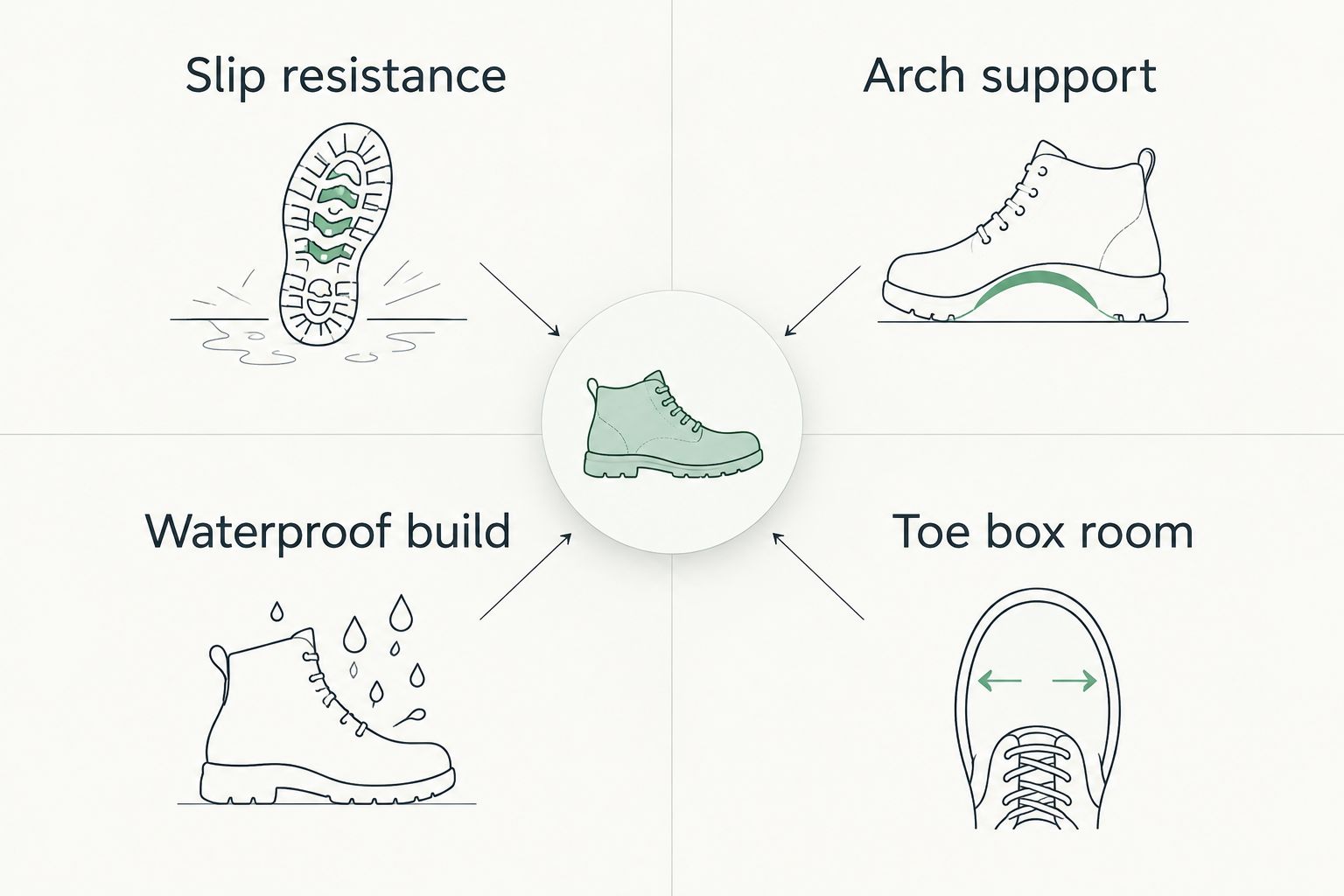
- Slip resistance on wet, waste-covered floors — rated outsoles, not just "non-slip" marketing language
- Arch and heel support for 8-12 hour shifts — a firm midsole that doesn't compress by hour six
- Waterproof or fully washable construction — daily hose-downs destroy leather that isn't sealed
- Wide, deep toe box — feet swell over a long shift, especially in Florida heat
- Removable factory insole — required for staff who need custom orthotics
- Ankle stability on uneven exhibit terrain — mulch beds, rock work, and sloped drainage aren't flat floors
At a glance
| Shoe category | Best for | Standout feature | Key limitation |
|---|---|---|---|
| Slip-resistant clog (Dansko-style) | Quick changes, wash-down areas | Slide on/off between tasks | Less ankle support on uneven ground |
| Waterproof rubber boot (Muck Boot, Bogs) | Wet enclosures, hosing routines | Fully sealed, hoses off clean | Hot and heavy for all-day wear |
| Supportive athletic work shoe (Hoka, Skechers Work) | Long walking routes, plantar fasciitis | Cushioned midsole for mileage | Not fully waterproof |
| Composite-toe boot (Danner, Keen Utility) | Large-animal handling | Protects toes without steel-toe weight | Break-in period before all-day comfort |
| Removable-insole work shoe (New Balance industrial) | Staff using custom orthotics | Insole swaps out for a custom device | Standard fit may need a wide-width order |
1. Slip-resistant clogs: best shoe for zookeepers doing quick changes
Clogs built for wet commercial floors, the style Dansko popularized in healthcare and food service, work the same way in animal care: slide-on convenience between feeding, cleaning, and handling tasks. The rocker-bottom sole and roomy toe box reduce pressure on the ball of the foot during a long standing shift.
Dansko-style clog pros:
- Fast on/off between wet and dry tasks
- Roomy toe box accommodates swelling by afternoon
- Slip-resistant outsole rated for wet, greasy floors
Dansko-style clog cons:
- Less lateral ankle support on mulch beds or sloped terrain
- Not ideal for staff who need a boot around large hoofed animals
Verdict: Buy for wash-down stations, keeper kitchens, and short-duration tasks. Not the right primary shoe for a full outdoor exhibit route.
2. Waterproof rubber boots: best shoe for zookeepers in wet enclosures
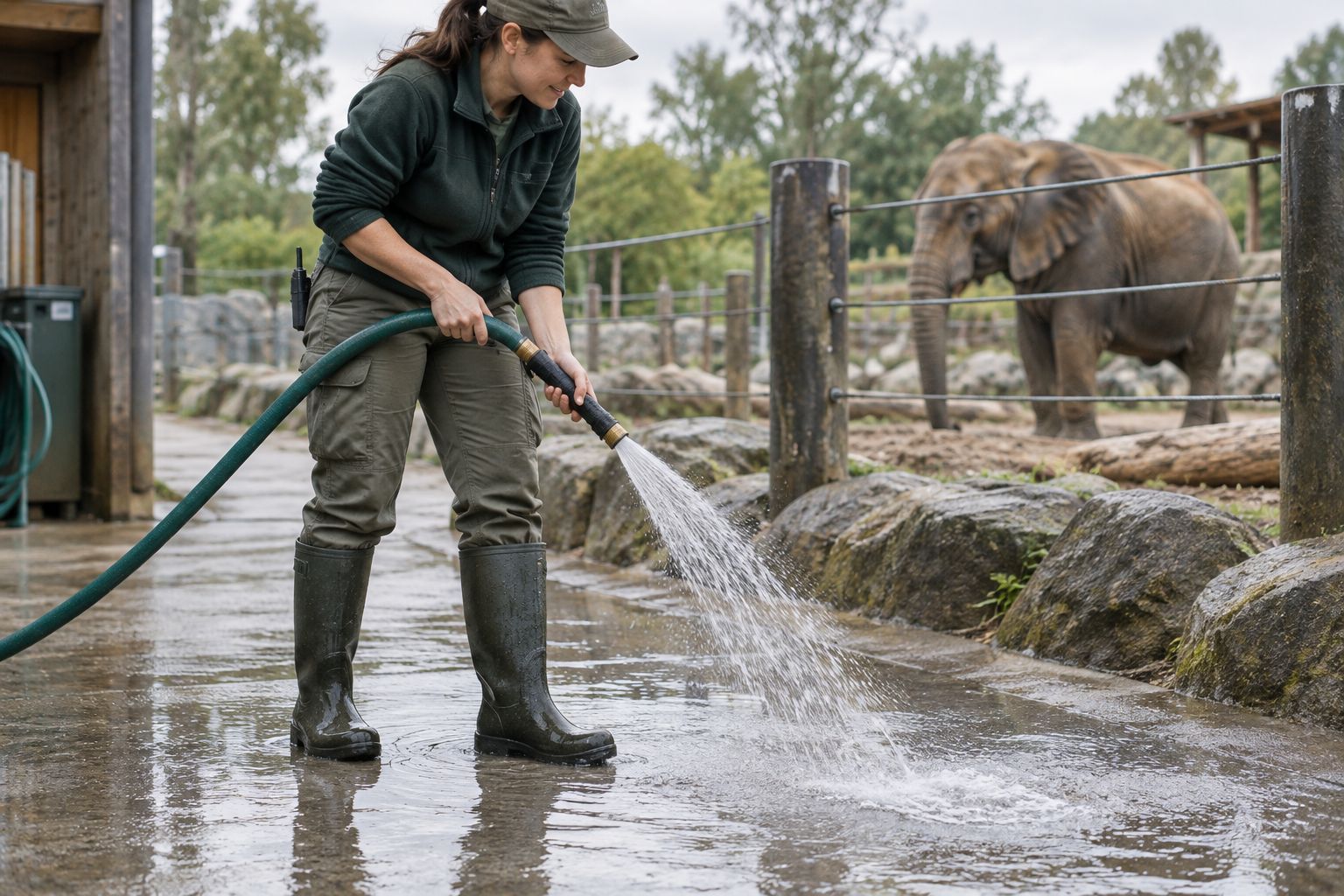
Muck Boot and Bogs-style rubber boots are the standard for staff hosing down enclosures, wading in shallow pools, or working aquatic exhibits. The fully sealed construction means no water intrusion and an easy hose-off at the end of a shift.
Rubber boot pros:
- Fully waterproof, hoses clean in seconds
- Tall shaft protects against splashes and mud
- Durable against daily wet-to-dry cycling
Rubber boot cons:
- Runs hot in Florida humidity over a full shift
- Heavier than athletic or clog styles, which fatigues the lower leg faster
Verdict: Buy for wet-exhibit and aquatic-area staff. Skip as an all-day general-purpose shoe.
3. Supportive athletic work shoes: best shoe for zookeepers walking long routes
Staff covering large properties on foot, feeding routes, perimeter checks, guest interaction areas, do better in a cushioned athletic work shoe than a boot or clog. Brands like Hoka's work line and Skechers Work build in the arch support and shock absorption that reduce cumulative strain over an 8-12 hour shift.
This is the category most directly tied to plantar fasciitis prevention. Staff already dealing with heel pain should compare options on best shoes for plantar fasciitis relief before assuming a new pair alone will fix an existing injury.
Athletic work shoe pros:
- Cushioned midsole reduces heel and forefoot strain on long routes
- Breathable upper handles Florida heat better than rubber boots
- Lightweight compared to composite-toe boots
Athletic work shoe cons:
- Not waterproof; unsuitable for wash-down duty
- Slip-resistant models cost more than standard athletic sneakers
Verdict: Buy for mileage-heavy roles and staff managing existing heel pain.
4. Composite-toe boots: best shoe for zookeepers handling large animals
Anyone working directly with hoofed or large-bodied animals, hooved-stock keepers, farm exhibit staff, needs toe protection without the weight penalty of a steel toe. Composite-toe boots from Danner or Keen Utility meet safety standards while staying lighter over a full shift.
Composite-toe boot pros:
- Protects against crush injuries from hooves and large-animal contact
- Lighter than steel-toe equivalents, less fatigue by hour eight
- Ankle support suited to uneven exhibit terrain
Composite-toe boot cons:
- Break-in period before the boot feels comfortable all day
- Bulkier than a clog or athletic shoe for fine-motor tasks like enrichment prep
Verdict: Buy for large-animal handlers. Hold off if the role is primarily small-animal or aviary care.
5. Removable-insole work shoes: best shoe for zookeepers using custom orthotics
Staff already prescribed custom orthotics need a shoe built around a removable factory insole, not one glued in place. New Balance's industrial line is a common example built with enough internal volume to swap the stock insole for a device.
Anyone unsure whether an over-the-counter insole is enough, or whether a custom device is worth the switch, should read custom orthotics vs. over-the-counter insoles: which to choose before buying either.
Removable-insole shoe pros:
- Compatible with a custom orthotic device
- Standard work-shoe durability and slip resistance
- Available in wide widths for swelling feet
Removable-insole shoe cons:
- Not waterproof in most models
- Requires the extra step of ordering and fitting an orthotic separately
Verdict: Buy for anyone already using, or likely to need, a custom orthotic.
How we ranked
Each category was scored against the six criteria above: slip resistance, arch support, waterproofing, toe box room, insole compatibility, and ankle stability on uneven ground. No category wins on every criterion, which is the point. A zoo shift has too many task types for one shoe to cover all of them, so the ranking is built around matching category to task, not naming a single "best" shoe.
“If a shoe stops supporting your arch by hour six of a shift, the fix is a different shoe, not a thicker insole.”
Which shoe should you choose?
For most full-time zookeepers and animal care staff, the supportive athletic work shoe is the default daily pick in 2026, since most shifts involve more walking than standing still in one wet spot. Keep a pair of waterproof rubber boots or slip-resistant clogs on hand for wash-down duty, and move to a composite-toe boot only for roles that put you in direct contact with large or hoofed animals. Staff already managing heel pain, arch collapse, or a prescribed orthotic should treat shoe selection as a medical decision, not a comfort one, and get best work boots for foot and ankle support on the job reviewed against their specific job duties.
Get your feet checked before the pain sets in
Board-certified podiatrists across nine Southwest Florida locations, same-day appointments available.
FAQ
What is the best shoe for zookeepers in 2026?
There is no single best shoe for every task. A supportive athletic work shoe like Hoka or Skechers Work suits long walking routes, while waterproof rubber boots handle wash-down duty and composite-toe boots protect against large-animal handling.
Are clogs good for zoo and animal care work?
Slip-resistant clogs work well for quick changes near wash-down stations and keeper kitchens, but they offer less ankle support on uneven exhibit terrain than a boot.
Do zookeepers need waterproof boots?
Anyone hosing down enclosures, working aquatic exhibits, or wading through shallow water needs a fully sealed waterproof boot, since daily wet-to-dry cycling breaks down leather footwear quickly.
Can zookeepers wear custom orthotics in work shoes?
Yes, but only in a shoe built with a removable factory insole. Shoes with a glued-in insole can’t accommodate a custom device.
What causes heel pain in zookeepers and animal care staff?
Long hours on wet concrete combined with worn-out or unsupportive footwear is the most common driver of plantar fasciitis and heel pain in this job. Cushioned midsoles and proper arch support reduce that strain.
Is a steel-toe or composite-toe boot better for animal handlers?
Composite-toe boots protect against crush injuries from large or hoofed animals with less weight than steel-toe equivalents, which matters over an 8-12 hour shift.
How often should zookeepers replace their work shoes?
Replace a shoe once the outsole tread flattens or the midsole no longer springs back after standing, whichever comes first, since a worn sole on wet floors becomes a slip hazard.
One last thing
Most zookeepers rotate two shoe types across a single week, a waterproof boot for wash-down days and a cushioned athletic shoe for route-heavy days, rather than trying to find one pair that does both jobs. Staff who skip that rotation and wear one shoe for everything are the ones podiatrists see most often for heel pain that doesn't resolve on its own by 2026's humid summer months.
Related guides

