
 Fax: (239) 692-9436
 Tel: 239-430-3668
Foot drop after a stroke changes how you shop for shoes: you need room for a brace, a sole that won't catch your toe, and a fit that stays locked in for hours of physical therapy and daily walking. The best shoes for foot drop stroke recovery in 2026 are AFO-compatible high-top athletic shoes for anyone wearing a brace, extra-depth walking shoes for daily use without one, and rocker-sole shoes for reducing toe drag on flat ground.
- AFO-compatible high-tops are the best shoes for foot drop stroke patients wearing a brace daily in 2026.
- Extra-depth walking shoes work best once swelling is controlled and no brace is needed.
- Rocker-sole shoes reduce toe drag but need 1-2 weeks to adjust your gait to the curve.
- A podiatrist gait check, not guesswork, should decide which category fits your stage of recovery.
Why this matters
Close to 800,000 Americans have a stroke every year, and published stroke-rehabilitation research puts foot drop in roughly one in five to one in four of those survivors. The wrong shoe doesn't just feel uncomfortable — a toe that catches on carpet or pavement is one of the most common causes of a fall during recovery.
Getting the shoe category right matters more than getting the brand right. What foot drop is and how it gets treated covers the nerve and muscle causes behind the condition, which is worth reading before you shop, because the right shoe depends heavily on whether you're wearing an ankle-foot orthosis (AFO) or not. Family Foot & Leg Center sees stroke survivors across Southwest Florida — from Marco Island up through Naples, Estero, Fort Myers, Cape Coral, Port Charlotte, and Sarasota — at 9 locations, and gait pattern is the first thing a podiatrist checks before recommending footwear.
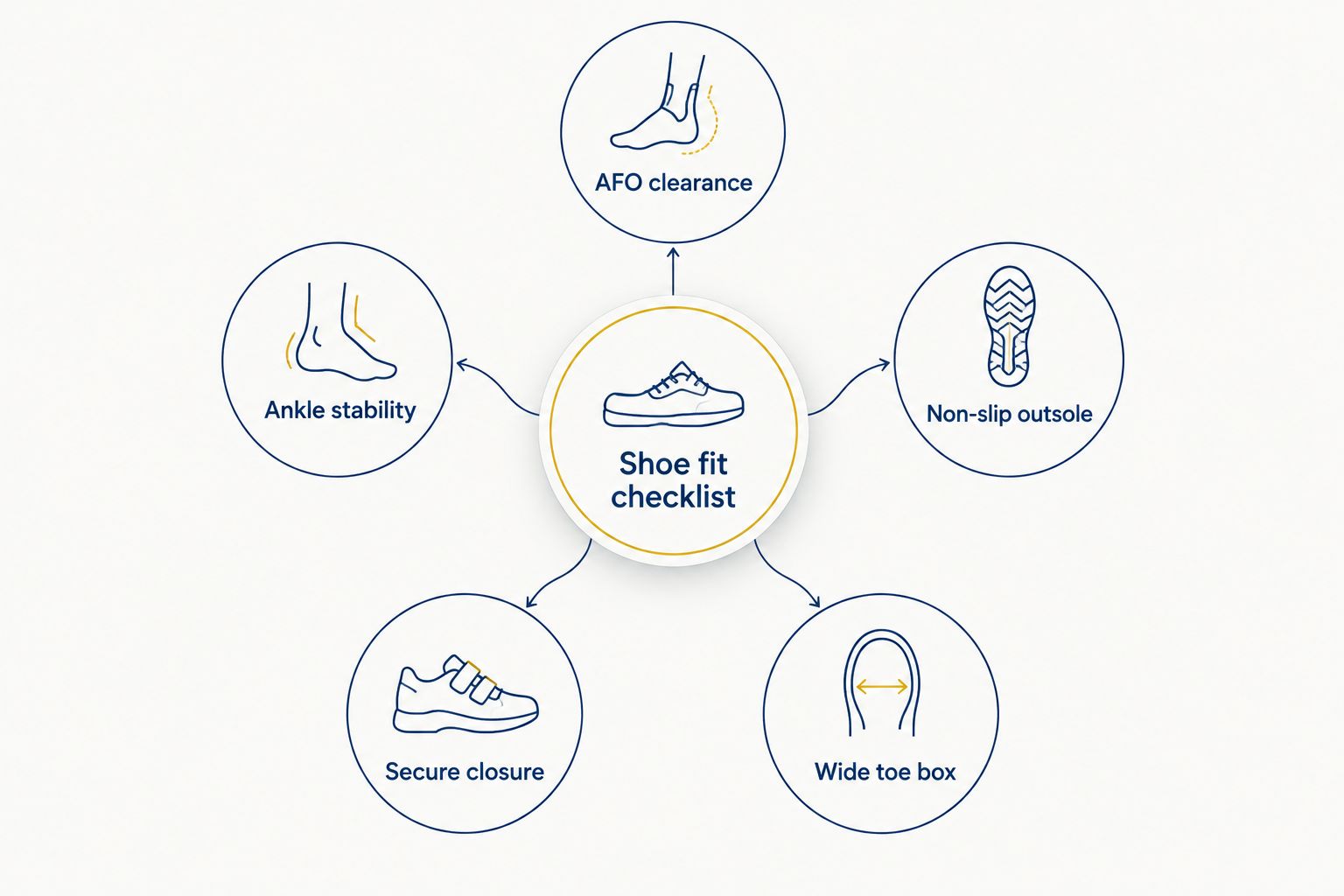
What makes the best shoe for foot drop
- AFO clearance — enough internal volume and a wide opening to fit over a brace without pinching
- Ankle and heel stability — a firm heel counter that keeps the foot from rolling sideways
- Non-slip, low-profile outsole — enough grip to prevent slips without a thick sole that catches on uneven ground
- Secure, adjustable closure — Velcro or a Boa-style dial beats laces if hand function is also affected
- Wide, squared toe box — room for swelling and for toes that curl or drag
- Rocker or slight toe-spring sole — helps roll the foot forward instead of catching the toe mid-stride
At a glance
| Shoe type | Best for | Standout feature | Key limitation |
|---|---|---|---|
| AFO-compatible high-tops | Wearing a brace daily | Wide opening and removable insole fit over an AFO | Bulkier profile than a standard sneaker |
| Extra-depth walking shoes | Daily walking without a brace | Extra internal depth for swelling and custom insoles | Fewer style choices |
| Slip-resistant recovery shoes | Early in-home rehab | Firm rubber tread rated for smooth, hard floors | Not built for outdoor distance walking |
| Wide toe-box stability sneakers | Balance and fall prevention | Broad base with a low, flared heel | Less cushioning on long walks |
| Rocker-sole shoes | Reducing toe drag and tripping | Curved sole rolls the foot forward automatically | Takes 1-2 weeks to adjust your gait |
| Custom orthotic-ready shoes | Long-term brace or orthotic fit | Lace-to-toe design opens fully for easy donning | Needs a fitting visit, not off-the-shelf |
1. AFO-compatible high-tops: best shoes for foot drop stroke with a brace
These are built with a wider last and a taller, looser opening so an ankle-foot orthosis slides in without forcing the tongue or eyelets. Most come with a removable factory insole, which is what makes room for the brace's footplate in the first place. They're the default recommendation for anyone whose podiatrist has already prescribed or fitted an AFO.
AFO-compatible high-tops pros:
- Fit over a rigid or hinged AFO without heel slip
- Higher ankle collar adds extra stability on uneven ground
- Wide toe box accommodates swelling from inactivity
- Available in walking and light athletic styles
AFO-compatible high-tops cons:
- Bulkier look than a standard walking shoe
- Not ideal once you've been weaned off the brace
Best for: stroke survivors actively wearing an AFO. Verdict: Buy.
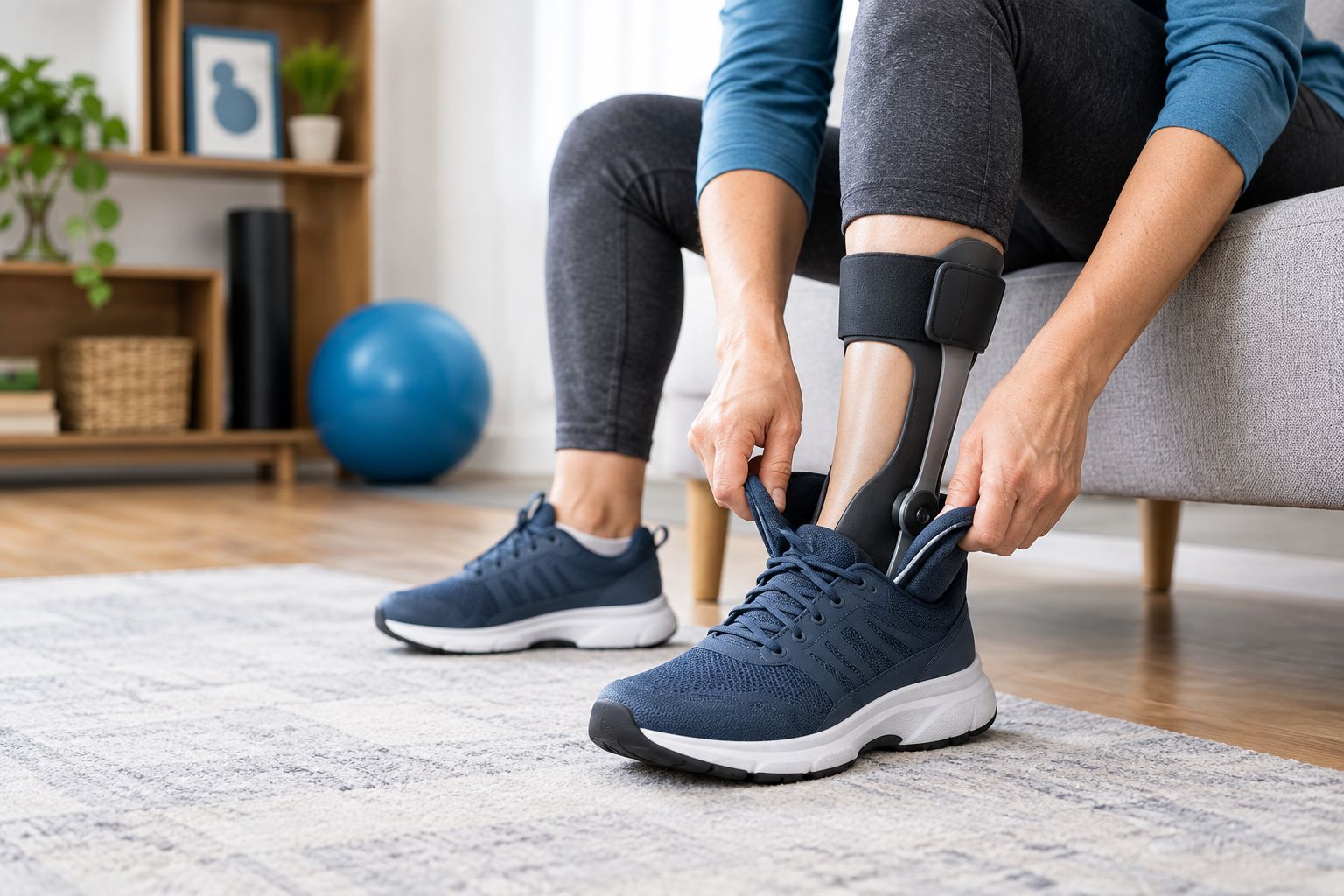
2. Extra-depth walking shoes: best for daily walking without a brace
Once swelling settles and a brace is no longer needed full-time, extra-depth walking shoes give you the room a custom insole or orthotic requires while still looking like an everyday sneaker. The added depth runs through the whole shoe, not just the toe box, which matters for anyone with mild residual swelling.
Extra-depth walking shoes pros:
- Enough internal volume for a custom orthotic
- Broad, stable sole for outdoor and indoor walking
- Lighter and less bulky than AFO-compatible high-tops
Extra-depth walking shoes cons:
- Not enough clearance for a rigid AFO
- Style selection skews toward walking shoes, not athletic cuts
Best for: patients past the brace stage who still need extra room. Verdict: Buy.
3. Slip-resistant recovery shoes: best for early in-home rehab
In the first weeks after a stroke, most walking happens indoors on tile, hardwood, or hospital-style flooring. Recovery shoes with a firm, low-friction outsole are designed specifically for that environment rather than for distance walking outdoors.
Slip-resistant recovery shoes pros:
- Grippy tread reduces slips on smooth indoor floors
- Lightweight, easy to put on for limited hand or balance function
- Low cost of entry compared to specialized athletic shoes
Slip-resistant recovery shoes cons:
- Sole tread isn't built for outdoor distance or uneven terrain
- Minimal cushioning for all-day wear
Best for: the first phase of physical therapy at home or in a rehab facility. Verdict: Buy for short-term use.
4. Wide toe-box stability sneakers: best for balance and fall prevention
A squared, wide toe box gives the toes room to spread, which improves balance more than most people expect. Paired with a low, flared heel, this category is built around reducing the risk of a fall rather than athletic performance.
Wide toe-box stability sneakers pros:
- Wider base under the foot improves side-to-side balance
- Squared toe box gives curling or dragging toes room
- Low heel-to-toe drop reduces tripping risk
Wide toe-box stability sneakers cons:
- Less midsole cushioning than a dedicated walking shoe
- Not designed to fit over an AFO
Best for: stroke survivors focused on fall prevention over long-distance walking. Verdict: Buy.
5. Rocker-sole shoes: best for reducing toe drag and tripping
A rocker or slight toe-spring sole is curved so the shoe naturally rolls forward through each step, which compensates for the weak ankle dorsiflexion that causes foot drop in the first place. It's the category most directly aimed at the mechanics of the condition, not just comfort.
Rocker-sole shoes pros:
- Curved sole reduces the chance of the toe catching mid-stride
- Can reduce compensatory hip-hiking gait patterns over time
- Works with or without a brace, depending on the model
Rocker-sole shoes cons:
- Takes 1-2 weeks of adjustment before the gait feels natural
- Not recommended without a gait assessment first, since the wrong rocker angle can worsen instability
Best for: patients with mild to moderate foot drop who no longer need a rigid brace. Verdict: Buy, with a gait check first.
6. Custom orthotic-ready shoes: best for long-term orthotic fit
These open fully along the top — sometimes lace-to-toe — so a custom orthotic or a hand or vision-impaired user can get the foot in and out without fighting the shoe. They're a long-term solution once the recovery plan has settled on a specific orthotic device.
Custom orthotic-ready shoes pros:
- Full opening makes donning and doffing easier one-handed
- Deep enough for most custom orthotic devices
- Reasonable range of casual and dress-adjacent styles
Custom orthotic-ready shoes cons:
- Requires a proper orthotic fitting first, so it's not an off-the-shelf purchase
- Fewer athletic or high-activity options
Best for: stroke survivors settled into a long-term orthotic routine. Verdict: Buy after a fitting.
How we ranked these
Each category was scored against the six fit criteria above: AFO clearance, ankle stability, outsole grip, closure security, toe box width, and sole shape. A gait pattern check is the deciding factor a podiatrist uses to move someone from one category to the next — the same process covered in gait analysis: what a podiatrist checks and why it matters. No category on this list was scored on price, because footwear pricing varies too much by retailer and season to rank fairly.
Get a gait check before you buy shoes
Board-certified podiatrists across Southwest Florida can confirm which shoe category fits your recovery stage.
Which shoe should you choose?
If you're wearing an AFO right now, AFO-compatible high-tops are the default choice — they're the only category built to clear a brace without heel slip. If the brace has come off and swelling is controlled, extra-depth walking shoes cover daily walking, while rocker-sole shoes are worth a look once a podiatrist confirms your gait pattern can tolerate the curved sole. For patients still in the first weeks of rehab, slip-resistant recovery shoes are the safer indoor pick until a longer-term shoe is chosen.
Many patients move through two or three of these categories over the course of a single recovery — brace, then transition shoe, then a long-term orthotic-ready pair. That progression is normal in 2026 stroke rehab pathways and isn't a sign anything went wrong with the first pair.
FAQ
What is the best shoe for foot drop after a stroke?
For someone wearing an ankle-foot orthosis, an AFO-compatible high-top shoe is the best option because it has the extra width and depth needed to fit over the brace. Once the brace comes off, extra-depth walking shoes or rocker-sole shoes take over depending on gait pattern.
Can you wear regular shoes with an AFO?
Some people can, but most standard shoes don’t have enough internal volume or a wide enough opening to fit over a brace comfortably. AFO-compatible or extra-depth shoes are built specifically to solve that fit problem.
Do rocker-sole shoes help with foot drop?
Yes, a rocker or toe-spring sole rolls the foot forward through each step, which reduces the chance of the toe catching on the ground. It works best for mild to moderate foot drop and usually takes 1-2 weeks to feel natural.
What features should stroke survivors look for in shoes?
Look for AFO clearance if you wear a brace, a firm heel counter, a non-slip outsole, a secure closure like Velcro or a dial, and a wide, squared toe box. These six factors matter more than brand or style.
Are high-top shoes better than low-top for foot drop?
High-tops generally give more ankle stability and more room to fit an AFO, which makes them the better choice for active brace wearers. Low-top shoes work fine once someone has transitioned off a brace and just needs balance-focused footwear.
How much wider does a shoe need to be to fit an AFO?
There’s no fixed rule, since it depends on the AFO’s footplate thickness, but most people need at least a half to full size up, or a shoe specifically labeled extra-depth or AFO-compatible. A podiatrist fitting is the most reliable way to confirm the size.
Should stroke survivors see a podiatrist before buying shoes?
Yes — a gait check identifies exactly how the foot drop is affecting your walk, which determines whether you need a rigid AFO, a transition shoe, or a rocker sole. Buying shoes before that assessment often means a second purchase later.
Can custom orthotics replace an AFO?
For mild foot drop, a custom orthotic combined with a supportive shoe sometimes replaces a rigid brace, but that decision depends on muscle strength and nerve recovery. A podiatrist evaluation, not a shoe store, is where that call gets made.
One last thing
The detail most people miss: foot drop severity often changes month to month during stroke recovery, so the shoe that worked at week 4 may be the wrong fit by week 12. Re-check the fit every time your therapy plan changes, not just when the old pair wears out.
Related guides
- Best shoes to prevent falls in seniors
- Custom orthotics vs. over-the-counter insoles: which to choose
- Balance and ankle strength exercises for older adults

