 Fax: (239) 692-9436
 Tel: 239-430-3668
Best overall: Vionic. Best for heel pain: Aetrex. Best for wide feet: Rockport. Best for formal styling: Cole Haan. Best for extended standing: Ecco. This 2026 guide compares the best orthotic dress shoes for job interviews by fit, stability, removable-footbed space, and interview-ready appearance.
- Vionic is the best orthotic dress shoe for job interviews in 2026 for balanced support and office-ready styling.
- Choose Aetrex when heel pain is the priority, but verify removable-insole depth on the exact model.
- Rockport fits the wide-foot slot; Cole Haan prioritizes a slimmer, dressier profile.
- Bring your orthotic and interview socks to the fitting instead of guessing from the size label.
Why this matters
A job interview often combines more standing and walking than expected. You may cross a large office, tour a facility, wait in a lobby, or remain on your feet while meeting several people. A dress shoe that pinches at the start usually feels worse as the day continues.
Traditional dress shoes can create problems when they have a tapered toe box, a rigid upper, a narrow outsole, or a factory insole that cannot be removed. Stacking an orthotic on top of that insole raises the heel and crowds the forefoot. Removing the original footbed is usually the cleaner fit when the shoe is designed to allow it.
Naples Podiatrist treats foot and ankle conditions that can make formal footwear difficult, including heel pain, bunions, neuromas, flat feet, and stiff big toes. If dress shoes repeatedly trigger symptoms, the underlying issue matters as much as the shoe. The guide to foot pain from dress shoes explains the common pressure points office workers encounter.
In 2026, the best orthotic dress shoes for job interviews are not necessarily the softest shoes on the shelf. They are the shoes that hold the foot securely while leaving enough internal volume for the orthotic to sit flat.
What makes an orthotic-friendly dress shoe
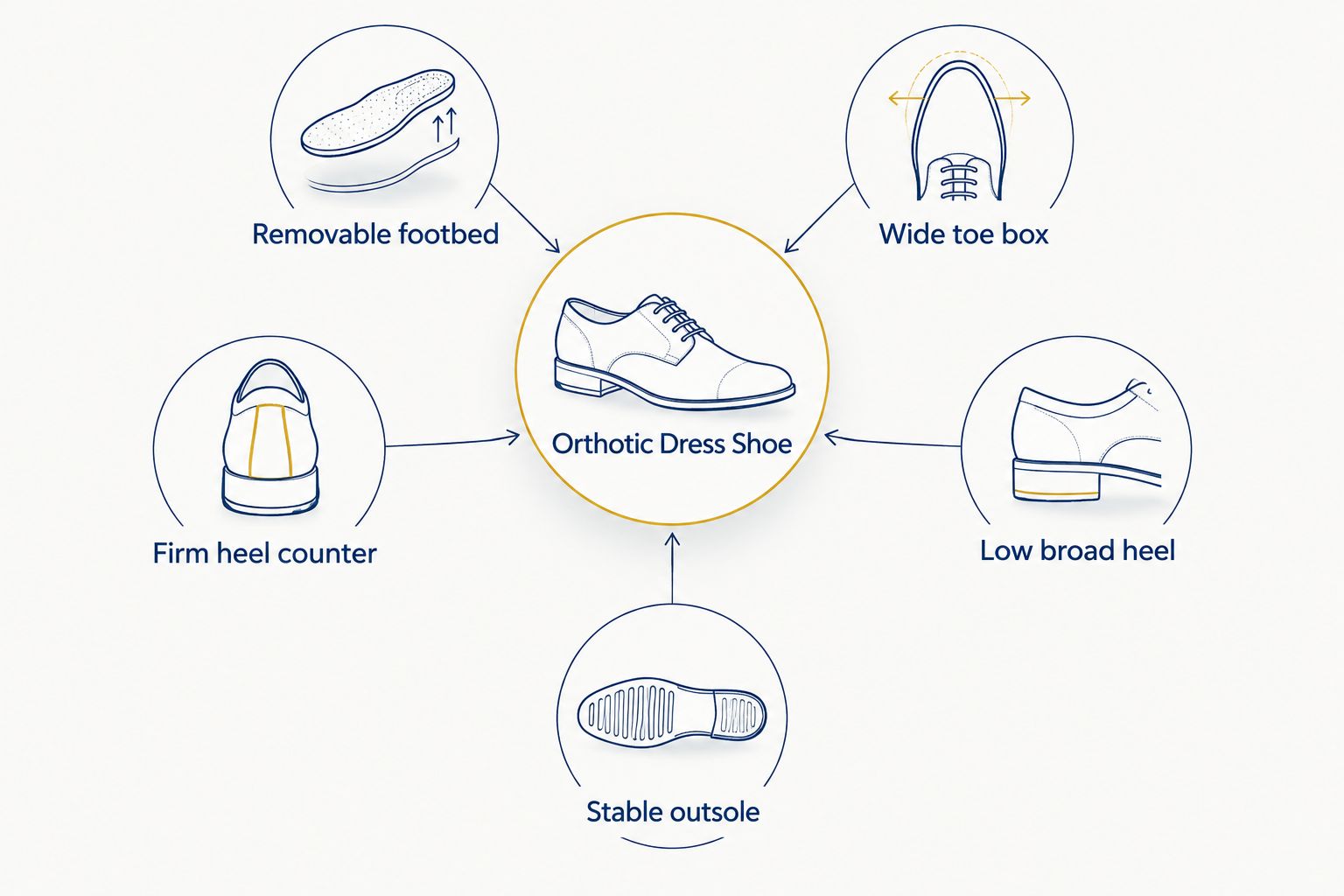
Naples Podiatrist's 2026 orthotic dress-shoe checklist focuses on six features. A shoe needs the right structure before cushioning can help.
- Removable footbed: The factory insert should lift out without tearing or leaving an uneven surface beneath the orthotic.
- Adequate internal depth: Your heel must remain seated after the orthotic is inserted. Heel slip means the shoe is too shallow or the device is too thick for that model.
- Wide toe box: Your toes should lie flat without rubbing the sides or pressing against a tapered front.
- Firm heel counter: The rear of the shoe should resist collapsing when pressed. This helps keep the heel centered.
- Stable outsole: A broad contact area is more dependable than a narrow or sharply beveled sole when you are standing on hard floors.
- Low, broad heel: A heel around 1 inch is a practical starting point for many orthotic users because it limits the forward pitch of the foot. The correct height still depends on the orthotic and your condition.
Measure both feet before buying because one foot can require more room than the other. Follow the foot measurement process while wearing the socks planned for the interview.
Use a simple fitting check once the orthotic is inside. Stand for 5 minutes, then walk indoors for 10 minutes. Reject the shoe if the heel lifts, the toes feel compressed, the orthotic rocks, or the upper presses across the top of the foot. Breaking in leather can soften the upper, but it does not correct the wrong length, width, or internal depth.
Orthotic-friendly dress shoes at a glance in 2026
| Brand | Best for | Standout feature | Key limitation |
|---|---|---|---|
| Vionic | Most job interviews | Contoured support and removable footbeds on select styles | Some designs look more conservative |
| Aetrex | Heel pain and arch support | Deep heel and arch-focused shape | Some styles have a bulkier profile |
| Clarks | Broad selection | Multiple business styles with removable footbeds | Construction varies significantly by model |
| Rockport | Wide or flat feet | Multiple width choices in many lines | Wider shapes can feel loose on narrow feet |
| Cole Haan | Formal appearance | Slim business styling | Many styles lack enough depth for thick orthotics |
| Ecco | Extended standing and walking | Anatomically shaped interiors on select styles | Fewer traditional formal options |
This is a brand-level shortlist, not a guarantee that every model will accept an orthotic. Footbeds, widths, and internal depth vary within each brand. Check the exact pair with your device inserted before removing labels or wearing it outside.
1. Vionic: best overall for job interviews
Vionic is the best starting point for most people seeking an office-appropriate shoe with structured support. Select dress styles combine a contoured factory footbed with enough room to test a personal orthotic after that footbed is removed.
The main advantage is balance. Vionic offers business-casual loafers and dressier options without pushing every buyer into a sneaker-shaped shoe. The styling works for interviews where a traditional leather appearance matters but foot support cannot be ignored.
Vionic pros:
- Structured footbeds are central to the brand's footwear design.
- Select models include removable inserts.
- Loafer and lace-up options cover several office dress codes.
- Firm rearfoot construction is available in many styles.
Vionic cons:
- Not every model has enough depth for a rigid custom device.
- Some styles look more conservative than slim European dress shoes.
- Width and heel fit still vary by model.
Best for: Applicants who want one dependable pair for the interview and later office use.
Verdict: Buy, provided the exact model passes the heel-slip and toe-room checks with your orthotic inserted.
2. Aetrex: best for heel pain
Aetrex is the stronger first brand to check when heel comfort and arch support matter more than a narrow silhouette. Its footwear commonly emphasizes contoured support, but you still need to confirm that the chosen dress model has a removable footbed.
A deep heel area can help an orthotic sit securely without sliding forward. That fit is useful when a long interview schedule includes standing, walking, and waiting on hard flooring.
Aetrex pros:
- Arch-focused construction suits people who dislike flat dress insoles.
- Select models provide room for removable inserts.
- Several designs use rounded rather than sharply tapered toe boxes.
Aetrex cons:
- Some options look more like comfort shoes than formal oxfords.
- A pronounced factory arch does not automatically match every foot.
- Thick custom orthotics can still raise the heel too high.
Best for: Interview candidates managing heel or arch discomfort who value fit over the slimmest profile.
Verdict: Buy after confirming that the orthotic rests flat and the heel remains below the shoe collar.
3. Clarks: best for a broad style selection
Clarks covers more visual ground than most comfort-focused brands, from plain loafers to traditional lace-up dress shoes. That variety makes it easier to match conservative, business-casual, or creative-office clothing without changing brands.
Construction is not consistent across every Clarks line. Some models have removable footbeds and forgiving interiors; others use thinner, fixed components that leave little room for an orthotic. The product description and an in-person fit check matter more than the logo.
Clarks pros:
- Wide selection of interview-appropriate styles.
- Multiple widths are available in some lines.
- Rounded-toe models can reduce forefoot crowding.
Clarks cons:
- Removable footbeds are not universal.
- Support differs substantially between models.
- Slimmer styles can become tight after an orthotic is inserted.
Best for: Buyers who need more choices in color, closure, and formality.
Verdict: Buy selectively. Skip any Clarks model with a fixed insole or shallow heel area.
4. Rockport: best for wide or flat feet
Rockport is the practical option when conventional dress shoes squeeze the forefoot or force you to size up for width. Many Rockport lines include width choices and rounded shapes that are easier to pair with an orthotic.
Sizing up only for extra width creates excess length, which can cause heel movement and toe gripping. Choosing the correct width gives the orthotic a more stable platform and keeps the shoe flex point closer to the ball of the foot.
Rockport pros:
- Width options are available across many business styles.
- Rounded shapes provide more forefoot space.
- Lace-up designs allow more adjustment over the instep.
Rockport cons:
- Wide models can feel loose on narrow heels.
- Some silhouettes look bulkier than formal dress shoes.
- Removable-footbed depth must be checked on the exact model.
Best for: People with wide feet, flat feet, or an orthotic that broadens the midfoot.
Verdict: Buy when width is the main fitting problem; skip if your foot is narrow and slides inside the heel.
5. Cole Haan: best for formal styling
Cole Haan earns its place for applicants who need a sharper, slimmer silhouette. The brand offers several office-ready loafers and lace-up shoes, but orthotic compatibility differs widely between styles.
A thin, flexible orthotic has a better chance of fitting than a thick or rigid device. A tapered Cole Haan shoe can also crowd bunions, hammertoes, or a wide forefoot even when the listed length is correct.
Cole Haan pros:
- Strong selection of polished business styles.
- Lightweight options are available.
- Slim profiles pair easily with formal interview clothing.
Cole Haan cons:
- Many models are too shallow for thick orthotics.
- Tapered toe boxes can compress the forefoot.
- Removable footbeds are model-specific.
Best for: Formal interviews where appearance is the priority and the orthotic is thin enough for the selected shoe.
Verdict: Hold until you test the exact pair with the orthotic. Skip any model that pushes the heel above the collar.
6. Ecco: best for extended standing and walking
Ecco is the strongest choice for an interview day that includes a facility tour, several buildings, or extended standing. Select dress styles use foot-shaped interiors and removable insoles while maintaining a clean business appearance.
The fit often feels less tapered than a traditional formal oxford. That extra room helps when the orthotic occupies more vertical or horizontal space, but it can feel loose if you have a narrow heel.
Ecco pros:
- Anatomically shaped interiors are available in select lines.
- Many styles use removable footbeds.
- Outsoles are generally broader than narrow formal soles.
Ecco cons:
- Traditional formal choices are limited.
- Fit can feel roomy on narrow feet.
- European sizing requires careful conversion and an actual fit test.
Best for: Candidates expecting a long interview schedule with significant walking or standing.
Verdict: Buy for active interview days after confirming the correct size and heel hold.
How the 2026 ranking works
This 2026 ranking prioritizes orthotic compatibility before appearance. A shoe cannot rank well if its factory footbed is fixed, its heel area is too shallow, or its toe box compresses the forefoot. Width choices, outsole stability, and business-appropriate styling separate the finalists.
Naples Podiatrist ranks brands by the features buyers can inspect before committing. The list does not treat softness as support, and it does not assume every shoe from one brand fits the same. The exact model must pass the fitting checks with your own orthotic, socks, and both feet evaluated.
If pain changes your gait or prevents you from standing comfortably, a shoe purchase alone is not a diagnosis. A foot and ankle specialist can determine whether the problem comes from the footwear, orthotic fit, or an untreated condition.
Get help with orthotic fit
Call 24/7 to request an appointment with a foot and ankle specialist.
Which orthotic dress shoe should you choose?
Vionic is the best orthotic dress shoe brand to check first for most job interviews in 2026. It offers the strongest balance of structured support, removable-footbed options, and office-ready styling. The exact model still needs to fit your device.
Choose Aetrex when heel or arch comfort is the priority. Choose Rockport when width is the main obstacle. Choose Cole Haan only when formal styling matters most and your orthotic is thin enough for the shoe. Choose Ecco when the day involves more walking than a typical office interview.
Naples Podiatrist's default recommendation is simple: fit the shoe around the orthotic you will actually wear. Do not buy a cramped pair and assume the upper will stretch enough. Do not remove the orthotic because the shoe looks better without it. If you are still choosing a device, compare custom orthotics and over-the-counter insoles before selecting the final shoe.
FAQ
What are the best orthotic dress shoes for job interviews in 2026?
Vionic is the best overall brand to check first for orthotic dress shoes in 2026. Aetrex suits heel-focused support, Rockport suits wide feet, and Ecco suits interview days with more walking.
Can a custom orthotic fit inside a regular dress shoe?
A custom orthotic can fit when the dress shoe has a removable footbed and enough internal depth. A shallow shoe can raise the heel, compress the toes, or prevent the device from sitting flat.
Is Vionic better than Clarks for orthotic support?
Vionic is the stronger first choice when structured support is the main priority. Clarks offers more style variety, but orthotic compatibility varies more between individual models.
What heel works best with an orthotic dress shoe?
A low, broad, stable heel works best for most orthotic dress shoes. A heel around 1 inch is a practical fitting starting point, but the correct height depends on the device and foot condition.
Should I break in dress shoes before a job interview?
Yes, wear the complete shoe-and-orthotic combination indoors before the interview. Breaking in can soften the upper, but it cannot correct the wrong size, width, or depth.
Which dress shoe brand is best for wide feet and orthotics?
Rockport is the best brand on this list to check first for wide feet and orthotics. Select models combine width choices with rounded toe boxes and adjustable lacing.
Can I stack an orthotic over the original shoe insole?
Do not stack an orthotic over the factory insole unless the prescribing clinician specifically directs it. Stacking often crowds the toes and raises the heel inside the shoe.
When should foot pain from dress shoes be checked by a podiatrist?
See a podiatrist when pain persists after removing the shoes or occurs with swelling, numbness, skin injury, or difficulty walking. Repeated pain can indicate a fit problem or an underlying foot condition.
One last thing
Bring the actual interview socks and orthotics when trying on shoes. A thin dress sock and a thicker casual sock change the available space, while a display insert tells you nothing about how your prescribed device will sit.
Naples Podiatrist serves patients through 9 Southwest Florida locations from the Naples area north toward Sarasota, with 24/7 phone scheduling available. If no dress shoe holds your orthotic without heel slip, forefoot pressure, or toe crowding, the device and shoe should be assessed together before interview day.
Related guides
- Custom orthotics versus over-the-counter insoles
- How to get custom orthotics from a podiatrist
- High heels and foot pain