 Fax: (239) 692-9436
 Tel: 239-430-3668
Treat foot and toe eczema by removing likely irritants, restoring the skin barrier with a fragrance-free moisturizer, and using anti-inflammatory medicine selected for the rash's location and severity. Confirm the diagnosis first because athlete's foot can look like eczema, while steroid treatment without an antifungal can allow a fungal infection to spread.
- Foot eczema treatment starts with confirming eczema, removing triggers, moisturizing daily, and controlling inflammation.
- Athlete’s foot can resemble eczema but requires antifungal treatment rather than steroid treatment alone.
- Dyshidrotic eczema causes itchy blisters; contact dermatitis often matches the shape of a shoe component.
- In 2026, painful cracks, drainage, spreading redness, or diabetes justify prompt specialist care.
- Naples Podiatrist offers quick access to foot and ankle specialists across Southwest Florida.
Why this matters
The foot creates a difficult environment for irritated skin. Shoes hold heat and sweat against the rash, socks add friction, and the thick skin on the sole absorbs medication differently from thinner skin elsewhere. Walking then pulls small cracks apart before the barrier can repair itself.
Several conditions resemble foot eczema in 2026. Athlete's foot can cause scaling, itching, and cracking. Psoriasis can create sharply defined thick patches. Bacterial infection can produce warmth, swelling, tenderness, drainage, or rapidly spreading redness. A treatment that helps one condition can delay care for another.
Naples Podiatrist is best for Southwest Florida patients who need quick access to a foot and ankle specialist when a foot rash is painful, recurrent, or unclear. The advantage is a foot-specific examination that can assess the skin, nails, circulation, sensation, and footwear together. The limitation is that persistent allergic contact dermatitis can also require formal patch testing through a dermatologist or allergist.
How do you treat foot and toe eczema?
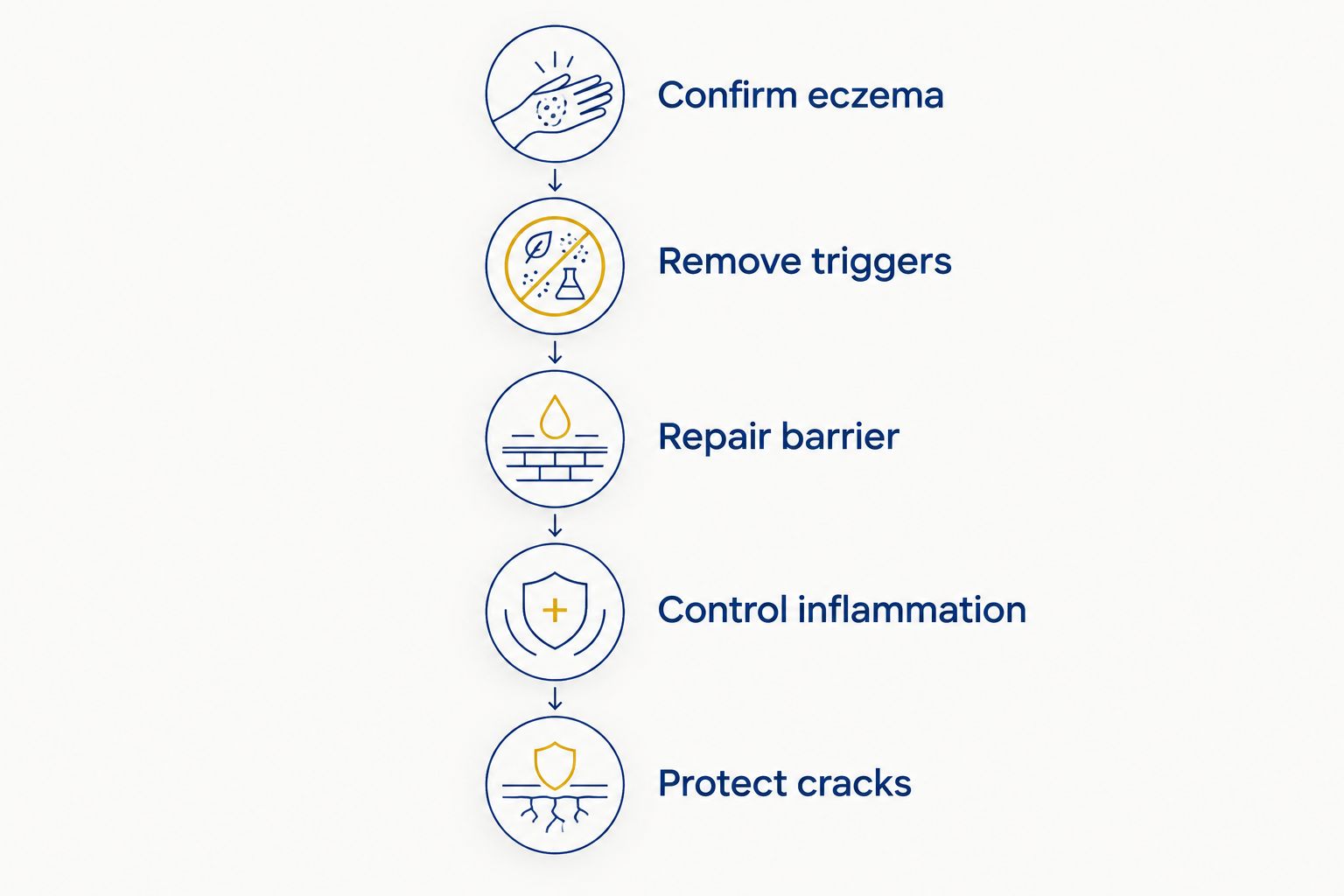
Effective foot eczema treatment follows a sequence: confirm what the rash is, stop the trigger, repair the skin barrier, reduce inflammation, and protect damaged skin while it heals. In 2026, do not begin by combining several creams at once. That approach can irritate the skin further and makes it difficult to identify which product helped or hurt.
1. Confirm that the rash is eczema
Check where the rash started and how it is distributed. Eczema often appears as itchy, dry, inflamed skin, but appearance alone does not reliably separate it from fungus. Scaling between the toes, changes in the toenails, or a rash affecting one foot more than the other raises concern for a fungal infection.
A clinician can examine the pattern and perform a skin scraping when fungus is possible. If the rash follows a sandal strap, shoe edge, adhesive panel, or sock elastic, allergic contact dermatitis moves higher on the list. If blisters cluster along the sides of the toes or on the sole, dyshidrotic eczema becomes more likely.
2. Remove likely triggers
Stop wearing any shoe or sock introduced shortly before the flare. Replace fragranced soap, foot spray, deodorizing powder, and scented moisturizer with simple fragrance-free products. Do not keep testing the suspected item against inflamed skin; repeated contact can prolong the reaction.
Common footwear triggers include rubber-processing chemicals, adhesives, leather treatments, dyes, and metal components. Sweat and friction are irritants even when there is no true allergy. Rotate footwear, let each pair dry completely, and change damp socks rather than leaving moisture against the skin.
3. Repair the skin barrier
Apply a thick, fragrance-free moisturizer at least 2 times a day and after washing. After a 5- to 10-minute lukewarm bath or shower, pat the feet dry and apply moisturizer within 3 minutes. Ointments hold moisture better than thin lotions, although greasy texture is the main drawback inside shoes.
Keep moisturizer out of persistently damp spaces between the toes unless a clinician directs otherwise. Excess moisture in those spaces can favor fungus and skin breakdown. Treat dry surfaces generously while keeping toe webs clean and dry.
4. Control inflammation safely
Topical corticosteroids reduce redness, itching, and inflammation when the diagnosis is eczema. Potency, frequency, and duration depend on whether the rash is on the thick sole, the thinner top of the foot, or between the toes. Use prescription medicine exactly as directed rather than extending a course because some redness remains.
Nonsteroidal prescription topicals are another option for selected patients and sensitive areas. Their benefit is avoiding steroid-related skin thinning with repeated use; their drawback is that they can sting when applied to cracked or actively inflamed skin. Severe or widespread eczema requires clinician-directed treatment rather than stronger self-treatment.
5. Protect cracks without trapping infection
Cover a clean superficial crack with a nonstick dressing if shoes rub against it. Avoid adhesive directly on irritated skin when contact allergy is possible. Deep fissures, bleeding, drainage, bad odor, increasing pain, or surrounding warmth need an examination before occlusive wraps or heavy ointments are added.
Do not cut thick skin from around a crack with a blade. That creates an open wound and is particularly dangerous when diabetes, neuropathy, poor circulation, or immune suppression is present. Recurrent heel fissures need a plan for the underlying dryness and pressure, not repeated trimming at home.
| Treatment option | What it does | Best for | Main drawback |
|---|---|---|---|
| Fragrance-free ointment | Reduces water loss and supports barrier repair | Dry, cracked eczema | Greasy inside footwear |
| Topical corticosteroid | Suppresses an active inflammatory flare | Confirmed eczema with redness and itching | Incorrect or prolonged use can cause problems |
| Nonsteroidal prescription topical | Controls inflammation without a topical steroid | Recurrent disease or selected sensitive areas | Can sting on broken skin |
| Antifungal medicine | Treats dermatophyte infection | Confirmed or strongly suspected athlete's foot | Does not treat eczema inflammation itself |
| Trigger avoidance | Stops repeated exposure | Contact dermatitis from footwear or skin products | The exact trigger can be hard to identify |
The 2026 treatment choice depends on diagnosis, not which tube promises the fastest itch relief. Use moisturizer for barrier repair, targeted medicine for the confirmed condition, and trigger avoidance to prevent the next flare.
Dyshidrotic eczema on the toes and soles
Dyshidrotic eczema produces intensely itchy, deep-seated blisters along the sides of the toes or on the soles. The blisters can merge, peel, and leave tender skin behind. Scratching increases skin damage and infection risk, so use a cool compress and clinician-directed anti-inflammatory treatment instead of opening the blisters.
Sweat can aggravate this pattern. Wear breathable shoes, change damp socks, and avoid remaining in wet footwear after golf, pickleball, running, boating, or yard work. These steps reduce irritation but do not replace medicine during an active flare.
Contact dermatitis from shoes or socks
Contact dermatitis often follows the shape of the material causing it. A rash under a sandal strap, near a metal ornament, around elastic, or across a glued shoe panel provides a useful clue. Both allergic reactions and simple friction irritation can appear in these locations.
The first treatment is removing the suspected item. A topical anti-inflammatory can calm the existing rash, but the reaction returns if exposure continues. When several pairs cause the same problem, patch testing can identify specific allergens and guide future footwear choices.
Atopic eczema and very dry foot skin
Atopic eczema is more likely when you also have eczema elsewhere or a history of asthma or environmental allergies. Dryness, itching, and repeated scratching can thicken the skin over time. Daily moisturizer remains necessary between flares, not only when the skin turns red.
Dry eczema on the sole can resemble the conditions discussed in this guide to dry and cracked skin on the bottom of the foot. Do not assume every rough heel is eczema. Pressure-related callus, fungus, psoriasis, and circulation problems can also contribute.
Why foot eczema treatment varies
- Rash location: The sole has thicker skin than the top of the foot or toe webs, which changes topical treatment decisions.
- Moisture level: Dry fissures need barrier support, while soggy skin between toes needs careful drying and evaluation for fungus.
- Trigger exposure: A cream cannot fully control contact dermatitis while the same shoe material touches the skin every day.
- Secondary infection: Drainage, crusting, warmth, swelling, or increasing pain changes the treatment priority.
- Medical history: Diabetes, neuropathy, poor circulation, and immune suppression increase the consequences of an open crack.
- Activity and footwear: Golf, pickleball, running, and long work shifts increase heat, sweat, and friction inside shoes.
Southwest Florida adds year-round heat and humidity to these factors. Air-conditioned indoor spaces can then leave exposed skin feeling dry, creating repeated shifts between sweat and dryness. The practical answer is not to keep the feet constantly wet or heavily coated; it is to control sweat, change damp socks, and moisturize dry skin consistently.
What should you avoid putting on foot eczema?
Avoid fragranced lotions, essential oils, harsh antiseptics, and multiple medicated products layered without a diagnosis. A product described as natural can still cause allergic contact dermatitis. Burning after application is a reason to wash the product off and stop using it, not proof that it is working.
Do not use leftover prescription steroid from another body area without medical direction. Foot skin varies substantially by location, and medication selected for the sole may be inappropriate between the toes. Steroid treatment can also hide redness while an untreated fungal infection continues to spread.
Avoid long, hot soaks. Warm water can feel soothing at first but removes protective oils and worsens dryness. Short lukewarm washing followed by prompt moisturizing supports the barrier without leaving the feet waterlogged.
When does foot eczema need a podiatrist?
Arrange an examination when the diagnosis is uncertain, the rash keeps returning, walking is painful, or home care is not settling the flare. Seek prompt care for spreading redness, warmth, swelling, pus, fever, red streaking, a deep crack, or rapidly increasing pain. Those findings raise concern for infection or a wound rather than uncomplicated eczema.
Patients with diabetes should not wait for a foot crack to become painful. Neuropathy can reduce warning pain, while circulation problems can slow healing. Naples Podiatrist can assess skin breakdown alongside sensation, circulation, footwear pressure, and the need for advanced wound care.
Naples Podiatrist has 9 Southwest Florida locations serving patients in Naples, Estero, Fort Myers, Cape Coral, Port Charlotte, and Sarasota. The practice covers patients from Marco Island to Sarasota and provides quick access to board-certified foot and ankle specialists. Calls are answered 24/7 to help patients make appointments.
Have a foot rash checked
Call 24/7 for appointment help with a Southwest Florida foot and ankle specialist.
Is foot eczema contagious?
Foot eczema is not contagious because it is an inflammatory skin condition rather than an infection. You cannot catch eczema by touching the rash or sharing a floor, but a fungal infection that resembles eczema can spread through contaminated surfaces, towels, socks, and footwear.
Until the diagnosis is clear, keep feet covered in shared wet areas and do not share towels or shoes. This limits fungal exposure without requiring you to isolate from other people.
How long does foot eczema take to improve?
Improvement depends on the eczema type, severity, continued trigger exposure, and whether infection or fungus is also present. Itching and redness should move in the right direction once the correct trigger and treatment are addressed; worsening despite treatment means the diagnosis or plan needs reassessment.
Do not judge treatment only by color. Skin can remain darker or lighter after active inflammation settles, especially after repeated flares. Increasing pain, heat, swelling, or drainage matters more than lingering discoloration.
Can you treat foot eczema at home?
You can manage a mild, previously diagnosed flare at home with trigger avoidance, short lukewarm washing, fragrance-free moisturizer, dry socks, and medication already directed for that condition. New, blistering, one-sided, infected-looking, or persistent rashes need an examination because fungus, psoriasis, contact allergy, wounds, and other skin conditions can mimic eczema in 2026.
Naples Podiatrist foot eczema treatment is most relevant when the rash affects walking, footwear, nails, toe spaces, or an area with reduced sensation. A podiatrist can address those foot-specific factors while coordinating dermatology care when broader allergy testing is needed.
FAQ
What is the best foot eczema treatment in 2026?
The best foot eczema treatment in 2026 is the one matched to a confirmed diagnosis: trigger removal and fragrance-free moisturizer for all eczema, plus clinician-selected anti-inflammatory medicine for active inflammation. Fungus requires antifungal treatment instead.
How can I tell foot eczema from athlete’s foot?
You cannot always separate foot eczema from athlete’s foot by appearance alone. Scaling between the toes, nail changes, or a one-sided rash raises suspicion for fungus, and a skin scraping can help confirm it.
Can I put moisturizer between my toes?
Avoid heavy moisturizer between toes that remain damp unless a clinician specifically recommends it. Moisturize dry skin while keeping moist toe webs clean and dry.
Why do shoes make my eczema worse?
Shoes can trap heat and sweat, rub inflamed skin, or expose the foot to allergens in rubber, adhesives, dyes, leather treatments, and metal parts. A rash matching one shoe component strongly suggests contact dermatitis.
Should I pop dyshidrotic eczema blisters on my toes?
Do not pop dyshidrotic eczema blisters because opening them damages the skin barrier and increases infection risk. Use cool compresses and appropriate anti-inflammatory treatment instead.
When is foot eczema an emergency?
Seek urgent medical care for rapidly spreading redness, severe swelling, red streaking, fever, pus, or rapidly increasing pain. These signs can indicate infection rather than an uncomplicated eczema flare.
Is foot eczema more serious when you have diabetes?
Foot eczema is more concerning with diabetes because cracks can become wounds while neuropathy reduces warning pain and circulation problems delay healing. New breaks in the skin deserve prompt foot care.
Can a podiatrist treat eczema on the toes?
A podiatrist can evaluate toe eczema, rule out common fungal mimics, assess wounds, and prescribe or coordinate appropriate treatment. Recurrent allergic contact dermatitis can also require dermatologist or allergist patch testing.
One last thing
Take photographs of the rash before changing products or footwear. A clear image can preserve the original distribution after treatment starts, and the shape often reveals whether a strap, adhesive panel, sock edge, or toe-space infection is involved. Bring the suspected shoes and a list of every cream used to the appointment; that evidence is more useful than trying another product before the 2026 examination.
Related guides
- How to clean and care for diabetic feet
- Proper nail hygiene for foot health
- Skin cancer warning signs on the foot and ankle