
 Fax: (239) 692-9436
 Tel: 239-430-3668
Keep your foundation strong and your skin protected with expert tips from Dr. Patrick Bartholomew on the vital importance of foot dermatology.
From battling Florida humidity to the power of the urea cream, learn how proactive skin care prevents serious complications and keeps you moving comfortably.
Patrick Bartholomew, DPM
Kevin Lam, DPM, FACFAS
When patients visit me at our Cape Coral office, they often focus on the “heavy hitters” of podiatry: bunions, heel sparks, or stress fractures. While those structural issues are vital, there is a silent hero of mobility that often goes neglected until it’s screaming for attention – the skin.
As a podiatrist, I view the skin of the feet not just as an aesthetic concern, but as the primary barrier between your internal health and a world full of pathogens. In the unique climate of Southwest Florida, where humidity, sand, and open-toed shoes are daily staples, foot skin care isn’t a luxury; it is a clinical necessity.
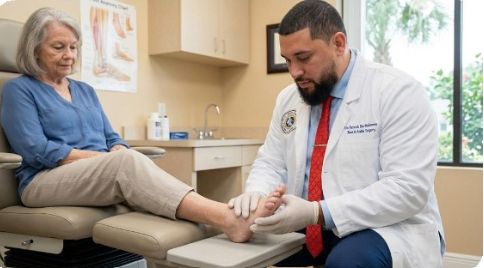
The Barrier Function: More Than Just “Rough Patches”
The skin on your soles is biologically distinct from the rest of your body. It lacks oil glands and is significantly thicker to withstand the immense pressure of your body weight. However, this thickness makes it prone to extreme dryness and cracking, a condition known as xerosis.
When the skin on the heels becomes overly dry, it loses its elasticity. Under the pressure of walking, that dry skin splits, creating fissures. These aren’t just painful; they are open portals for bacteria. For a healthy individual, a cracked heel is a nuisance. For a patient with diabetes or peripheral neuropathy, that some crack can be the starting point for a limb-threatening infection or ulcer.
Why Your Feet Need a Different Routine
You wouldn’t use dish soap to wash your face, yet many people treat the skin on their feet as an afterthought, using whatever harsh body wash drips down in the shower. To maintain the integrity of the pedal skin, we need to focus on two pillars: Hydration and Protection.
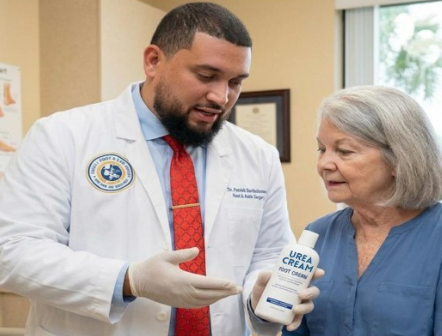
- The Urea Advantage: For the thick skin of the feet, standard lotions often sit on the surface. I frequently recommend creams containing urea. This compound acts as a keratolytic, meaning it helps break down the dead skin cells while drawing moisture into the deeper layers of the dermis.
- The Moisture Trap: The best time to apply foot cream is within three minutes of exiting the shower. Pat your feet dry – especially between the toes – and apply a thick emollient to “lock in” the hydration.
Crucial Tips for Daily Foot Health
Maintaining healthy skin doesn’t require a ten-step process. In my practice at Family Foot & Leg Center, I emphasize these high-impact habits:
- Dry Thoroughly Between Toes: Moisture trapped between the toes is a breeding ground for tinea pedis (athlete’s foot). Dampness softens the skin (maceration), making it easy for fungal spores to take root.
- Inspect Daily: You can’t treat what you don’t see. Use a hand mirror to check the soles of your feet for redness, blisters, or peeling.
- Avoid “Bathroom Surgery”: Please, put down the razor blades and cheese graters. Attempting to shave off your own calluses can lead to deep lacerations and infections. Professional debridement in a clinical setting is the only safe way to manage thick hyperkeratosis.
- Rotate Your Shoes: In our Florida heat, shoes become damp with perspiration. Giving your footwear 24 hours to dry out prevents the skin from being constantly exposed to a fungal “incubator.”
The Florida Factor: Sand, Sun, and Humidity
Living in Cape Coral means our feet are exposed to unique environmental stressors. Walking barefoot on the beach is a wonderful pastime, but sand is a powerful abrasive that can cause micro-tears in the skin. Furthermore, many residents forget that the tops of the feet are highly susceptible to skin cancer.
I tell my patients: if your feet are catching rays, they need sunscreen. Malignant melanoma on the foot is often diagnosed later than on other parts of the body because people simply don’t think to look there.
When to See a Professional
If you notice persistent redness, itching that won’t go away, or a “sugary” appearance to the skin (which often indicates a fungal infection), it is time to schedule an appointment. We see the skin as the “first responder” of the body. Changes in skin color or texture can be early indicators of circulatory issues or systemic diseases.
At Family Foot & Leg Center, we don’t just look at the bones; we look at the whole foundation. Your feet carry you through life; the least we can do is ensure the skin covering them is strong, supple, and sealed against the elements.
Remember, healthy skin is the first step toward a pain-free, active Florida lifestyle. Take care of your skin, and your feet will take you wherever you want to go.
If you would like more information about Minimally Invasive Bunion Surgery, don’t hesitate to contact Dr. Bartholomew’s office at (239) 430-3668 or visit www.NaplesPodiatrist.com to schedule an examination.
If you or a loved one has foot and leg concerns, contact FFLC office at (239) 430-3668 or visit www.NaplesPodiatrist.com to schedule an appointment.
Serving Southwest Florida Since 2005, Family Foot & Leg Center has multiple convenient locations throughout Collier, Lee, Charlotte, and Sarasota Counties. Offering pediatric to geriatric family care: Ingrown Toenails, Heel Pain, Bunions, Foot / Ankle Arthritis Pain, Plantar Fasciitis, Foot / Ankle Surgery, Custom Orthotics, and Diabetic Wound Care. In office X-rays, ultrasounds, and minor surgical suite exam rooms. Practice powered by EMR and advanced technologies.
Home of the Lam Minimally Invasive No-Scar Bunion Surgery! Come Discover Why Patients Love Our 5-Star Foot & Ankle Care!
For advanced wound management and diabetic wound healing resources, visit:
WoundHealingExperts.com
Same Day Appointments! Easy Online Appointment Scheduling.